CrossFit Workout Equipment List for a 1,500 sq ft Gym
By Skelcore India
The short answer: a CrossFit-style gym runs on six things. A rig or rack for pulling and lifting, barbells with bumper plates, a conditioning corner (air bike, rower, sled), loose kit like kettlebells and wall balls, a clean storage wall, and enough open floor to move. If you are planning crossfit workout equipment for a 1,500 sq ft space, this is the exact order we would buy it in.
Every number below is a planning example, not a rule. Say you have a 1,500 sq ft room, a class of about 10 members, and a budget that has to stretch. Where it helps, we point to the Skelcore product page so you can check sizes yourself.
How should you split a 1,500 sq ft CrossFit-style floor?
Give the biggest share to open floor, not machines. As a rough guide, plan about 40% for the rig and lifting area, 30% for open turf and movement space, 15% for conditioning machines and 15% for storage and walkways. Treat these as a starting point, not a standard.
Most new owners overbuy equipment and underbuy space. A class of 10 needs room to swing a kettlebell, drag a sled and drop a bar without anyone stepping on anyone. If the floor feels crowded on paper, it will feel worse on a Monday evening.
[TODO: add photo or video of a floor plan for a 1,500 sq ft functional training room]
What do you need for the lifting area?
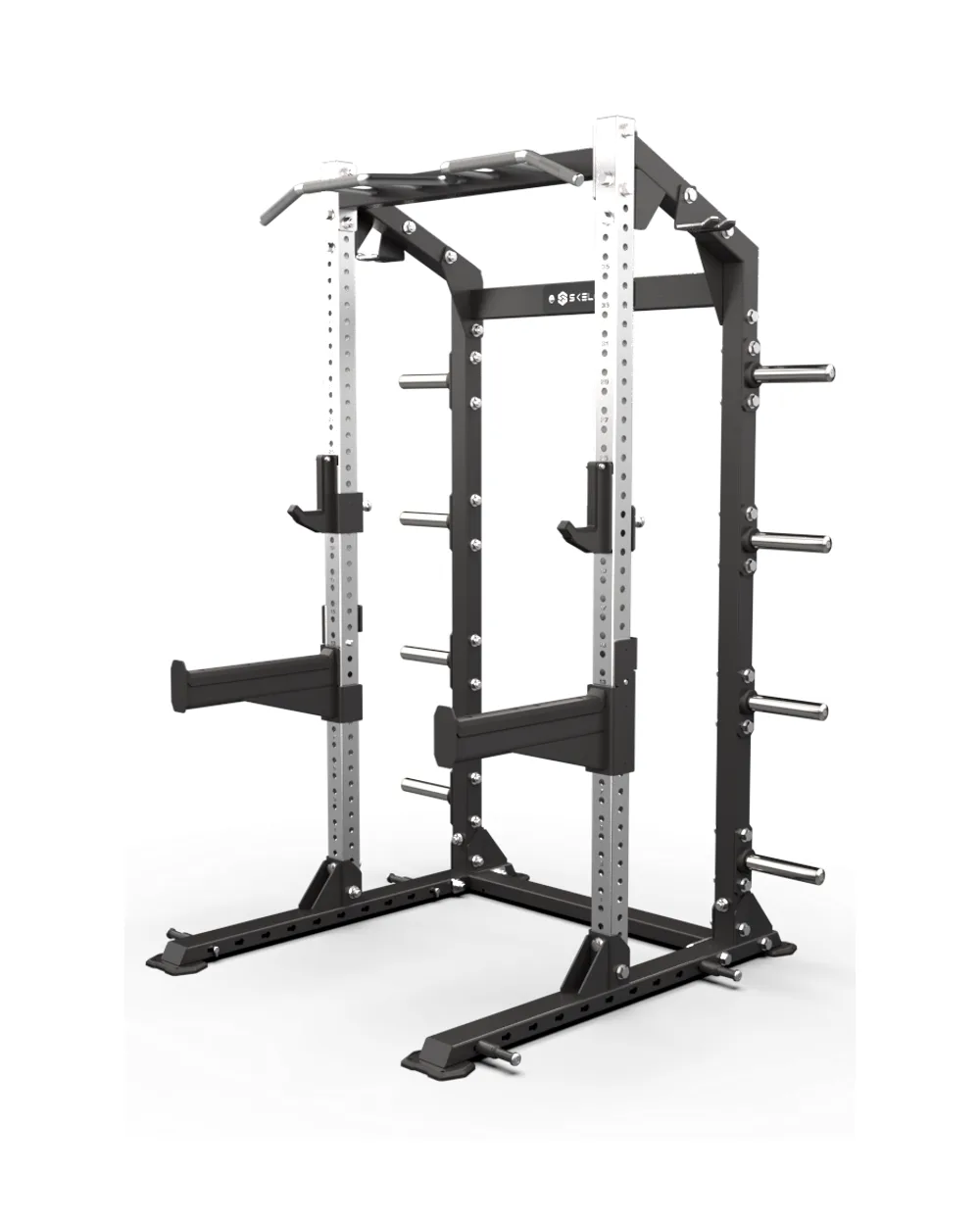
Start with racks and a rig. You need places to squat, press and hang from, and a way to store bars while they are not in use. For a small room, a compact half rack is the safer first buy.
Our Half Rack is 1522 x 1484 x 2352 mm in setup size and has an integrated pull-up bar. The large J-hooks are rated to 380 kg and the small ones to 250 kg, so the rack will hold more than your members will ever lift. It also takes the Half Rack Platform Rubber Insert, which gives you a lifting platform in the same footprint.
If you want a bigger lifting station, look at the Olympic Squat Rack (2230 x 1995 mm setup size). Browse the full range on our commercial racks page.
For group classes, the Hybrid Performance Rig is built to grow. The Starter Bay combines a rig frame, a wall ball target, a pull-up station and integrated storage. Modular Extension Bays bolt on and share an upright with the bay next to them. That means you can start with one bay and add more as your membership grows.
Tight on space or budget: one half rack with a platform insert.
Classes of 8 to 12: a rig starter bay, with extension bays added in phases.
Heavy lifting focus: a squat rack plus a separate platform.
Which barbells and plates should you buy?
Buy bumper plates, not iron plates, for anything that gets dropped. Bumper plates are the same diameter at every weight and made to hit the floor without cracking it. Using weight plates that are not meant to be dropped is how floors and plates get damaged.
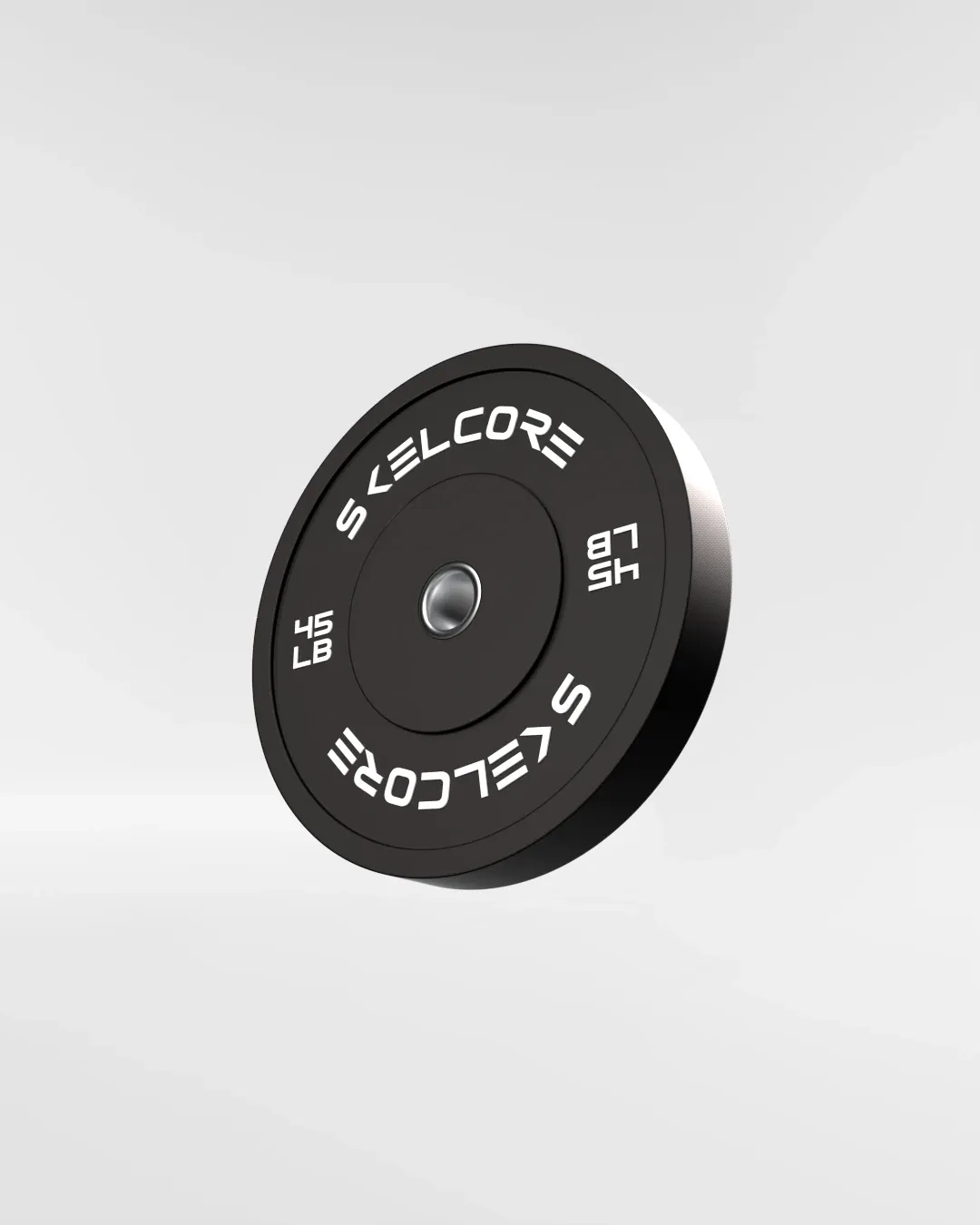
Our commercial weight plates range includes the Black Rubber Bumper in four sizes (5 to 20 kg). That is the practical choice if you need to outfit many bars on one budget. If your members train for competition lifting, the Competition Urethane Bumper Plate comes in five sizes (5 to 25 kg). It is thinner and bounces less, so more weight fits on the bar.
For bars, the Olympic barbells page has the Competition Barbell in 15 kg and 20 kg versions. The black version can also be custom-branded with your gym logo, which suits fit-outs where the bars should match the rest of the room. Use the 15 kg bar for lighter users and the 20 kg bar for everyone else. As a rough guide, plan one bar for every two members in a class.
Not sure how many plates to order per bar? Our guide on how many weight plates a commercial gym needs walks through it.
What conditioning machines belong in a small CrossFit-style gym?
Two air machines and a sled cover most conditioning work. Air machines get harder the harder you push, so a beginner and a fit athlete can use the same machine at different intensities. That is why they work so well in classes with mixed levels.
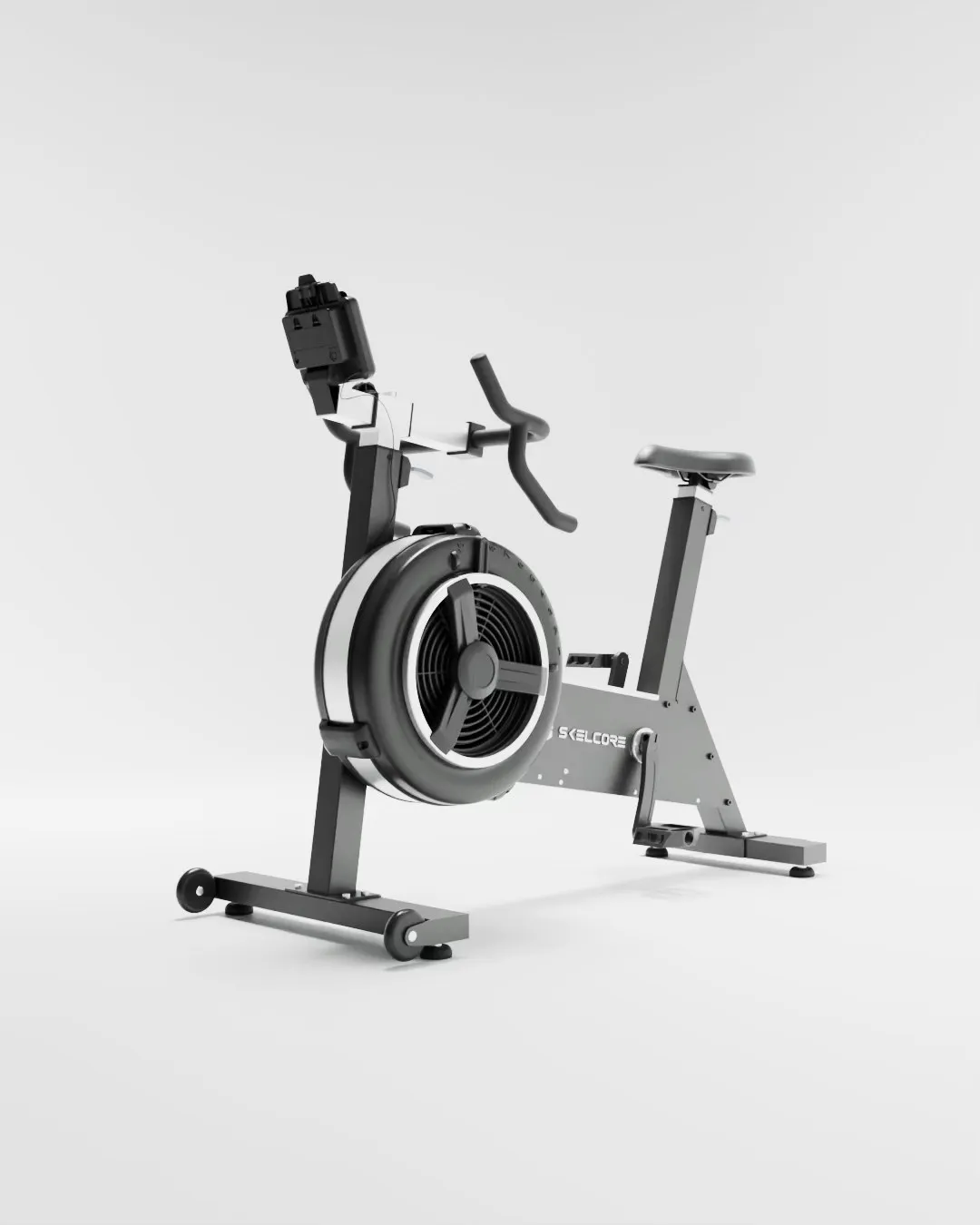
Skelcore's Air Bike uses fan resistance and carries a console showing RPM, heart rate, time and calories. Setup size is 1380 x 610 x 1350 mm, and the max user weight is 160 kg. The Air Rower is longer, at 2400 x 620 x 1070 mm, with a max user weight of 135 kg. Measure your wall space before you decide, because a rower needs more length than people expect.
See every conditioning machine on the HIIT cardio page.
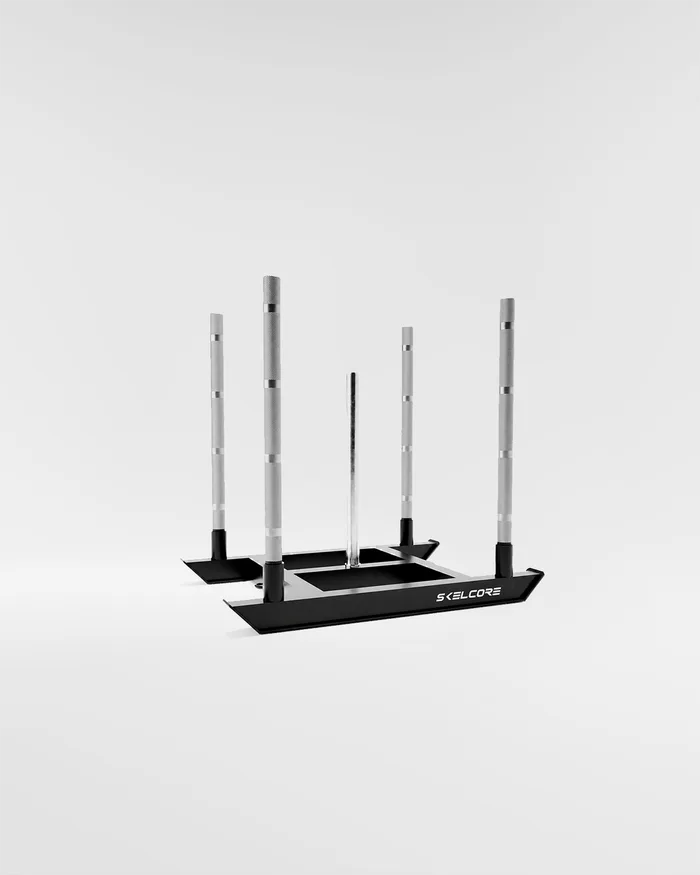
The Hybrid Sled loads with Olympic plates and has attachment points for straps and harnesses. It needs a clear lane, so only buy one if you can spare a strip of floor. A sled needs a turf strip or similar surface, so check your flooring first.
[TODO: confirm recommended flooring and minimum lane length for the Hybrid Sled]
Which loose kit gives you the most for the money?
Kettlebells, wall balls and plyo boxes. They are cheap per piece, take little floor space and let you run many different workouts with one class setup.
Kettlebells: choose steel for classes and PU leather soft kettlebells if members do box jumps near them.
Wall balls: pair them with the Hybrid Wall Ball Target on the rig.
Plyo boxes: the heavy-duty Plyo Box measures 500 x 600 x 760 mm.
Power rope and sandbags: good for finishers; buy a couple, not a dozen.
Browse all of it under our hybrid training equipment pages.
A sample equipment list for 1,500 sq ft
Here is a starting list for a class of about 10. Quantities are a rough guide, so adjust them to your layout and class size. We leave prices out because they depend on quantity, finishes and delivery, so ask for a quote.
Zone | What to buy | Rough quantity |
|---|
Lifting | Half Rack with platform insert, or a rig starter bay | 1 to 2 stations |
Bars and plates | Competition Barbells, Black Rubber Bumper plates | About 5 bars, with plates per bar |
Conditioning | Air Bike, Air Rower, Hybrid Sled | 2 to 3 machines, 1 sled |
Loose kit | Kettlebells, wall balls, plyo boxes | Enough for one per two members |
Storage | Plate rack, bar storage, kettlebell rack | One per zone |
What should you ask a supplier before you order?
Ask about floor loading, delivery and support before you talk about price. These are the questions that cost owners money later:
What are the exact setup dimensions, and do they match the room?
Can the rig be extended later, and will the new bay match the first?
What are the bar weights and plate sizes, and are the plates made for dropping?
Who installs it, and what support do you get afterwards?
[TODO: add a real example from the team of a layout that needed changing after install]
Prices depend on the quantities you order, the finishes you pick and where the equipment is delivered. That is why you will see "price on request" across the range. We deliver across India. Our only office is on Lavelle Road in Bengaluru, and it is an office, not a showroom.
Ready to plan your floor?
Send us your room size, class size and rough budget, and we will help you work out a first list. Request a quote and tell us what you are building.
Equipment in this article