How Many Weight Plates Does a Commercial Gym Need?
By Skelcore India
Most gym owners ask us for a plate count, and most of them ask too late. The racks are bought, the bars are on the floor, and then members start leaving plates all over the place because there are not enough of the right sizes. Getting the number of commercial weight plates right at the start saves you a second order and a lot of grumbling.
There is no single number that fits every gym. But there is a sensible way to work it out, and this article shows it step by step.
Start with the bars, not the floor area
Plates are used on bars, machines and benches. So count those first. Walk through your plan and list every place a member will load a plate:
- Olympic barbells (squat racks, bench presses, deadlift platforms)
- Plate-loaded machines such as leg presses, hack squats and chest presses
- Plate-loaded benches and any landmine or T-bar rows
Now think about how heavy your members lift. A gym full of beginners and office-going members rarely loads a bar beyond 60 or 80 kg. A strength-focused gym with serious lifters will see 140 kg squats on a regular day. Your plate count follows that, not your square footage.
A simple way to work out how many weight plates you need
Here is the method we suggest to gym owners. Decide the heaviest everyday load for each station, then stock enough plates so two members can train at the same time without waiting.
A standard Olympic bar weighs 20 kg. If you want a bar to reach 100 kg, you need 80 kg of plates, which is 40 kg on each side. One pair of 20 kg plates and one pair of 10 kg plates does it. That is four plates per bar for a basic working set.
Plate-loaded machines usually go heavier than bars. A leg press can take far more weight than a squat, so these machines are where your plate count climbs fast. If you are planning a plate-loaded machine zone, count plates for the machines first and for the bars second.
A worked example: a 2,000 sq ft gym
Say you have a 2,000 sq ft gym with two squat racks, two flat benches, one leg press and a small deadlift area. Members are a mix of beginners and regulars. Here is how we would think about it:
- Each squat rack and bench: enough for a bar up to about 100 kg.
- Leg press: enough for roughly 200 kg of plates in total.
- Deadlift area: one bar that can go to about 140 kg.
Add that up, and then add about 20 to 25 percent extra for the small plates, because small plates are the ones that run out first. This is our own rule of thumb, not a standard. Adjust it after the first month once you see what members actually use.
The sizes matter more than the total weight
This is where many new gyms go wrong. They buy a big total weight, but in only two or three sizes. Then a member who wants to add 2.5 kg to a lift cannot.
Always stock the small plates. A good working set has pairs of 1.25 kg, 2.5 kg, 5 kg, 10 kg, 15 kg and 20 kg. Members who are progressing slowly will thank you for the 1.25 kg pair. It costs little and it gets used every day.
| Plate size | How many pairs per bar or station | Who uses it |
|---|
| 1.25 kg and 2.5 kg | 2 pairs of each, shared across a zone | Beginners, small jumps, rehab clients |
| 5 kg and 10 kg | 2 to 3 pairs of each | Everyone, all day |
| 15 kg and 20 kg | 2 to 4 pairs, more near squat and deadlift stations | Regular lifters |
These are planning numbers from our experience, so treat them as a starting point. If you tell us your layout, we can help you turn them into a real list.
Which type of plate suits which area
Count is one half of the decision. The type of plate is the other. In a commercial gym, you will probably use more than one type.
Bumper plates for lifting platforms
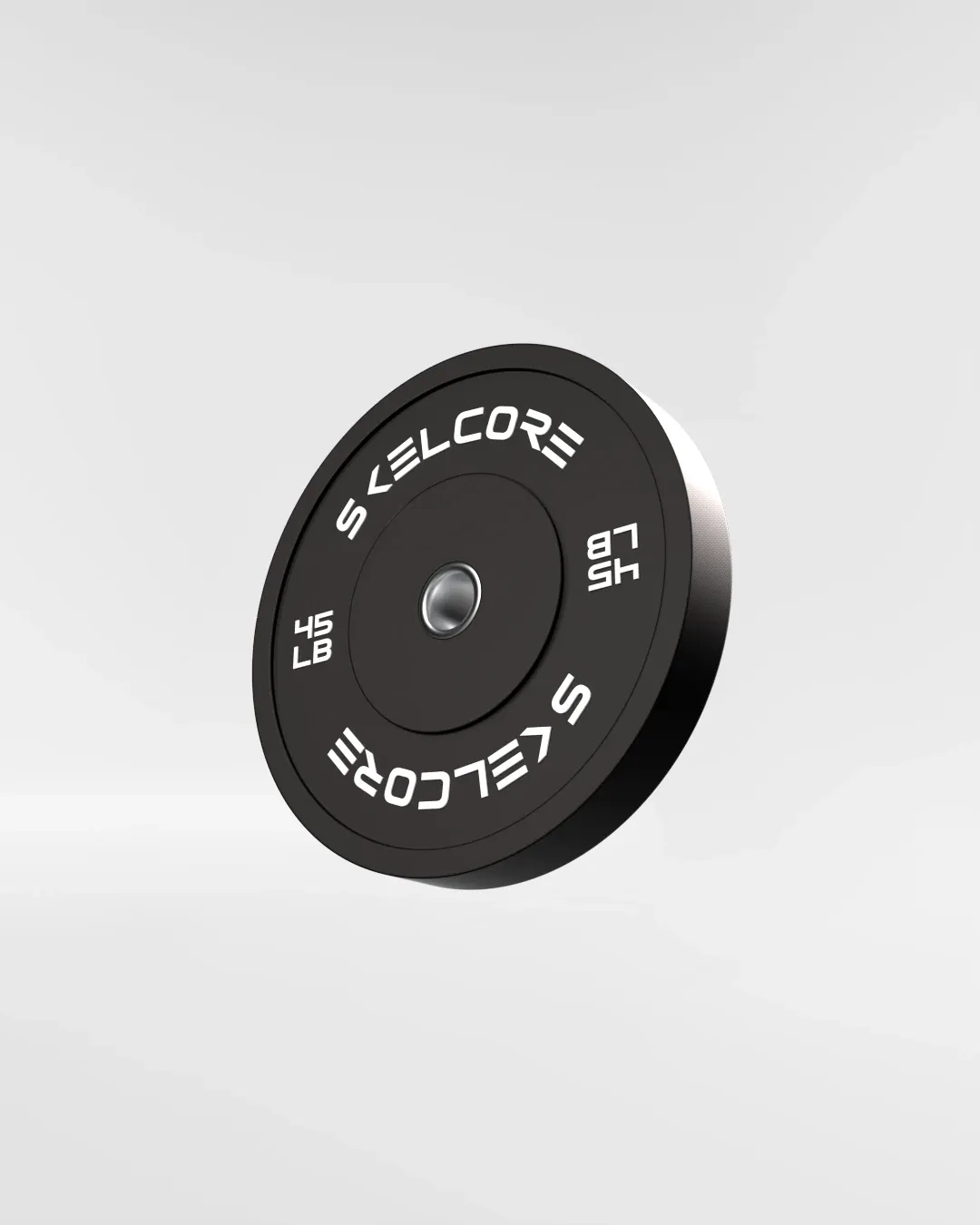
Bumper plates are thick, so they can be dropped from overhead without damaging the floor or the bar. If you have a platform for Olympic lifting, or a functional training area where members do cleans and snatches, you need these. Our Black Rubber Bumper comes in four kilogram sizes, from 5 to 20 kg, and suits everyday drops. For a flagship set, the Competition Urethane Bumper Plate runs 5 to 25 kg. Urethane is thinner and denser than rubber, so more plates fit on the sleeve.
Olympic plates for racks and machines
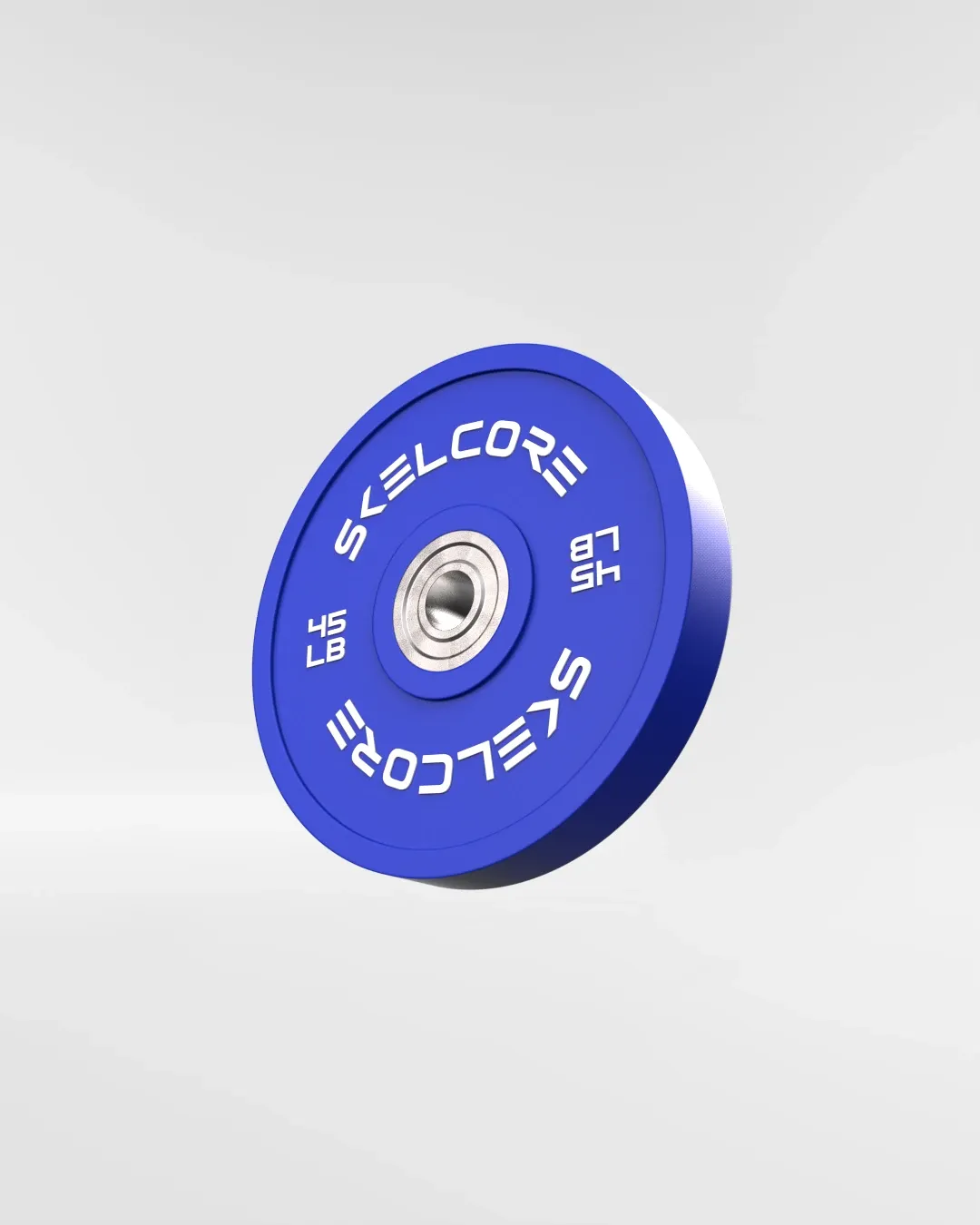
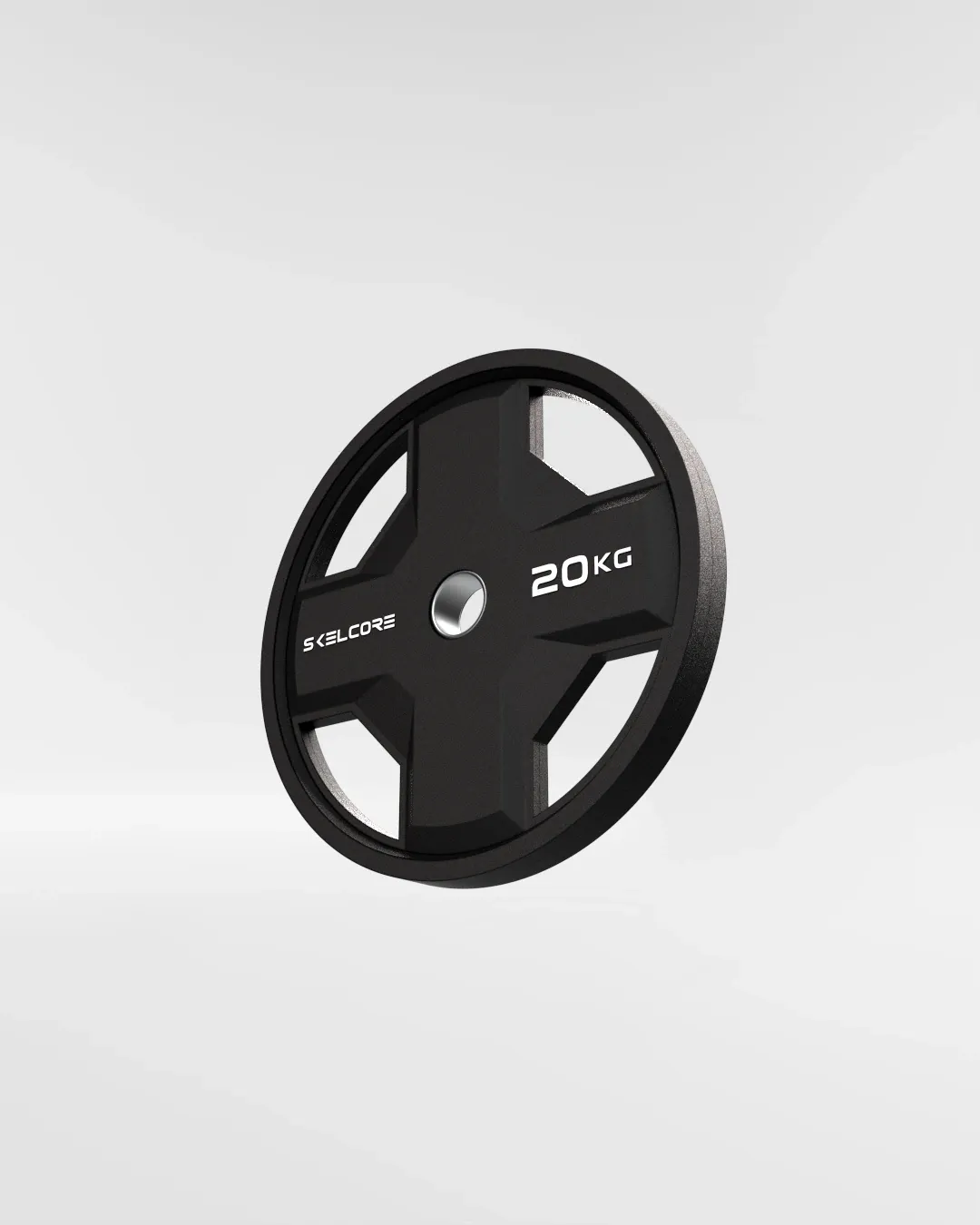
These are the plates your squat racks, benches and plate-loaded machines will use all day. They are thinner than bumpers and usually have grip handles. A kilogram set is important for Indian gyms. Our Quad-Grip Urethane Olympic Plate comes in six sizes from 1.25 to 20 kg, and it has four grip openings, which makes loading easier. Urethane also resists scuffs and odour better than rubber, which you will notice in an air-conditioned gym.
One warning. Our Rubber and Urethane Olympic Plates are made in pound sizes only. Check this before ordering if your members train in kilograms.
Chrome plates for small or styled spaces
The Chrome Weight Plate has a built-in handle and comes in 5, 10 and 20 kg. It is slim, so more plates fit on a sleeve. It suits a small studio or a hotel gym that wants one tidy family of plates. It does not have the small 1.25 kg and 2.5 kg jumps, so it is not enough on its own for a gym with many strength members.
How the gym type changes the answer
The same method gives different results for different gyms. Some quick examples:
- Hotel gym with one room: You probably need very little. One bar, one bench and a light set of plates up to 20 kg. Guests rarely lift heavy, and plates take space you may not have.
- Studio with low ceilings: Skip overhead lifting and bumpers. Choose Olympic plates for racks and machines, and keep the quantity modest.
- Corporate gym: Members are mostly beginners and mid-level. Lots of small and medium plates, fewer big ones.
- Strength-focused gym: Plan for more 20 kg plates than you think, plus a full range of small ones. Members here will fill a bar to its limit.
If most of your members are beginners, spend your money on a wide range of small and medium sizes, not on piles of 20 kg plates.
Do not forget where the plates will live
Plates without storage end up on the floor, and that is a safety problem. Plan storage at the same time you plan the count. Our Plate Tree has six posts, each rated to 100 kg, and it fits in a footprint of about 79 by 86 cm. That is small enough to sit beside a cluster of machines. For a platform area with bumpers, the Olympic and Bumper Plate Rack has horns for both plate types and keeps discs sorted by size.
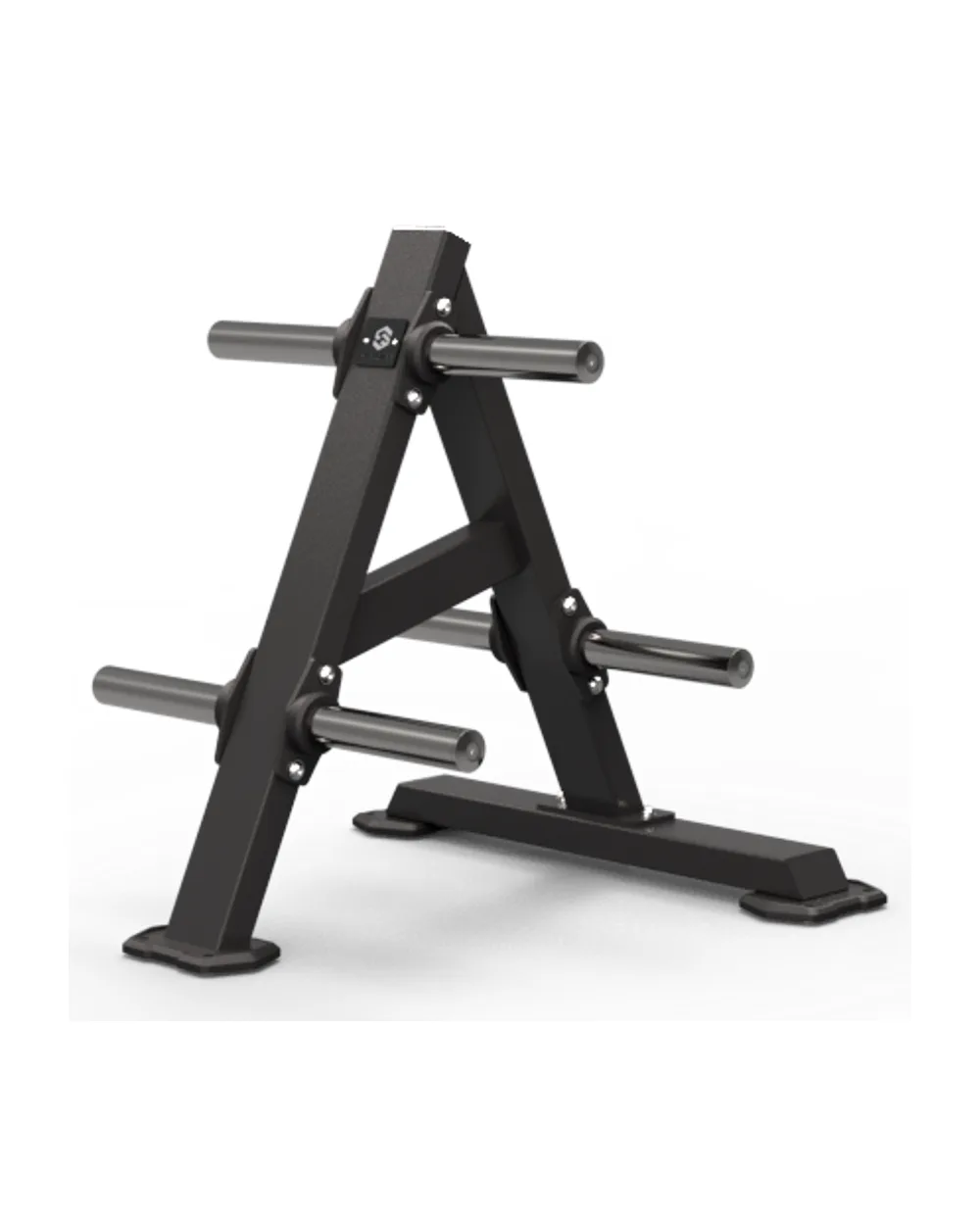
You can see the full range of gym storage racks on our site. And if your free-weight area also needs bars, our Olympic barbells and lifting bars are listed together so you can match plate and bar in one go.
What affects the price
Prices on our weight plates are on request. The main things that change the quote are:
- Material: rubber, urethane or chrome
- Total weight and the number of plates in each size
- Custom branding on the plate face, which is possible on some urethane plates
- Whether you want kilogram or pound sizes
- Delivery location and quantity [TODO: confirm minimum order quantity for plates]
Buying the whole plate list, storage and bars in one order is usually easier to manage than ordering in pieces. [TODO: confirm whether bundle pricing is offered]
A quick checklist before you order
- Count every bar and plate-loaded machine on your floor plan.
- Set the heaviest everyday load for each one.
- Stock the small plates: 1.25 kg and 2.5 kg at the very least.
- Choose bumpers only where weights will be dropped.
- Confirm the sizes are in kilograms.
- Plan one storage spot for every cluster of stations.
Talk to us about your plate list
Send us your floor plan, the number of members you expect and the kind of training you want to support. We will help you build a plate list that fits. You can request a quote here, and our team will get back to you.
Equipment in this article