Why a Stair Climber Machine Beats a Third Treadmill
By Skelcore India
Most gym owners buy cardio in one pattern: treadmills, then more treadmills, then a few bikes. It looks safe. But the third treadmill is often the machine that gets used least, while members queue for the one thing you do not have. A stair climber machine takes less floor than you might expect, and members like it because it is hard work without hammering the knees.
This guide is for owners fitting out a gym, a hotel fitness room or a studio. It explains the three kinds of stair climber machine, who each one suits, and what to check before you order.
What is a stair climber machine, and which types are there?
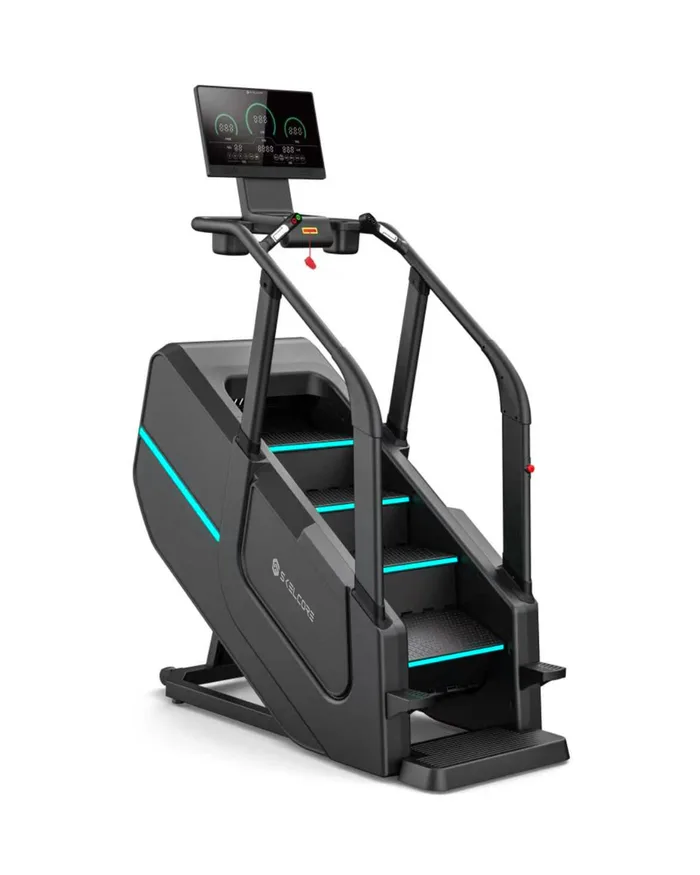
A stair climber machine lets a member climb steps without going anywhere. In a commercial gym the name covers three different machines, and they do not feel the same. We group them on our stair climbers and incline trainers range, and the stepper sits in our Black Series.
- Stair mill. A rotating staircase. The steps keep moving down, so the member has to keep climbing. It is the closest thing to real stairs.
- Stepper. Two pedals that move up and down against resistance. Smaller and simpler, with a shorter learning curve.
- Incline trainer. A treadmill that tilts very steeply. The member walks uphill rather than climbing steps.
Pick by what your members will actually do, not by which one looks most impressive on the floor plan.
Why a stair climber machine can beat a third treadmill
Because it adds a different kind of workout, not a copy of one you already have. Treadmills serve walkers and runners. A climber serves the member who wants a hard, short, sweaty session. It works the glutes and thighs hard, which is what a lot of members come in asking for.
It also helps at peak hours. When all your treadmills are taken at 7 pm, a climber gives the next person somewhere to go. And because the movement is low impact, you can put a heavier member or someone coming back from a long break on it without worry.
A rough guide: one climbing machine for every six to eight other cardio machines is a sensible start. If you have a strong HIIT or women's glute-training crowd, go higher. If your members are mostly casual walkers, one is enough.
Stair mill: the real stair climber
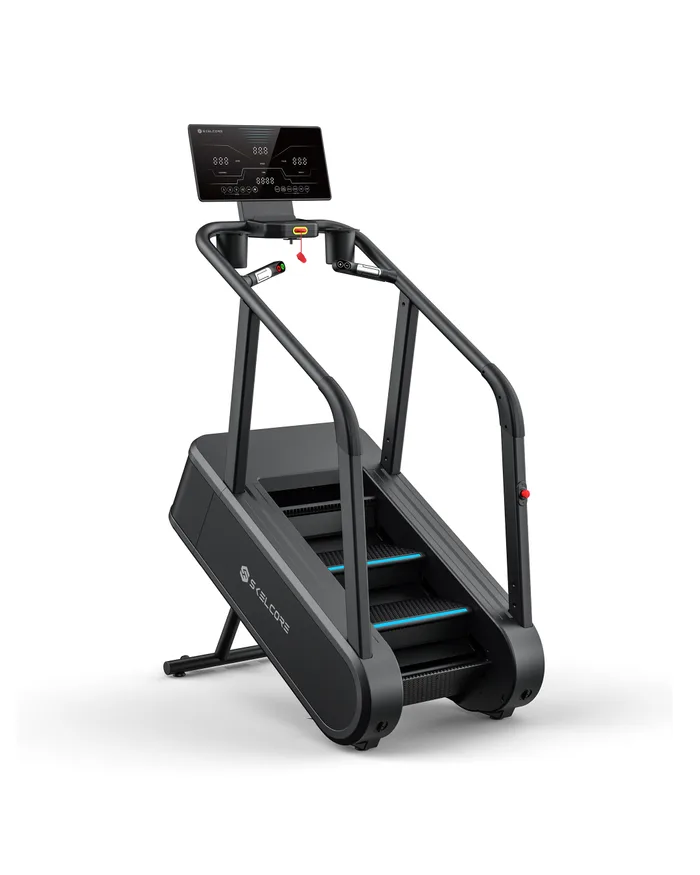
Choose a stair mill if members want proper stair climbing and your floor is a busy one. The Commercial Stair Mill has 15 levels and runs from 14 to 160 steps per minute. It takes users up to 160 kg, comes with 36 preset programs, and has auto-stop and anti-rolling protection.
You can pick the LED console, or the 23.8-inch TFT version with virtual video, Bluetooth audio and heart-rate connectivity. If your members like to watch something while they train, the TFT is worth asking about.
For smaller rooms there is the Light Commercial Stair Mill. It tops out at 140 steps per minute and has the same 15 levels and 36 programs, in a more compact body. It suits studios, hotel gyms and lighter-use facilities.
How much floor does a stair mill need?
The Commercial Stair Mill sets up at 1650 x 790 mm, which is about 1.3 square metres. The Light Commercial one is 1300 x 759 mm, about 1 square metre. Both are tall, though. The Commercial model stands 2285 mm high, so check your ceiling before you commit, especially in a basement or a studio with a false ceiling. [TODO: confirm the minimum ceiling height the team recommends once a member is standing on the machine]
Leave room around the machine as well. Members step on and off, and you want a clear path behind it. As a rough guide, keep about a metre clear at the back.
Stepper: the easy first machine
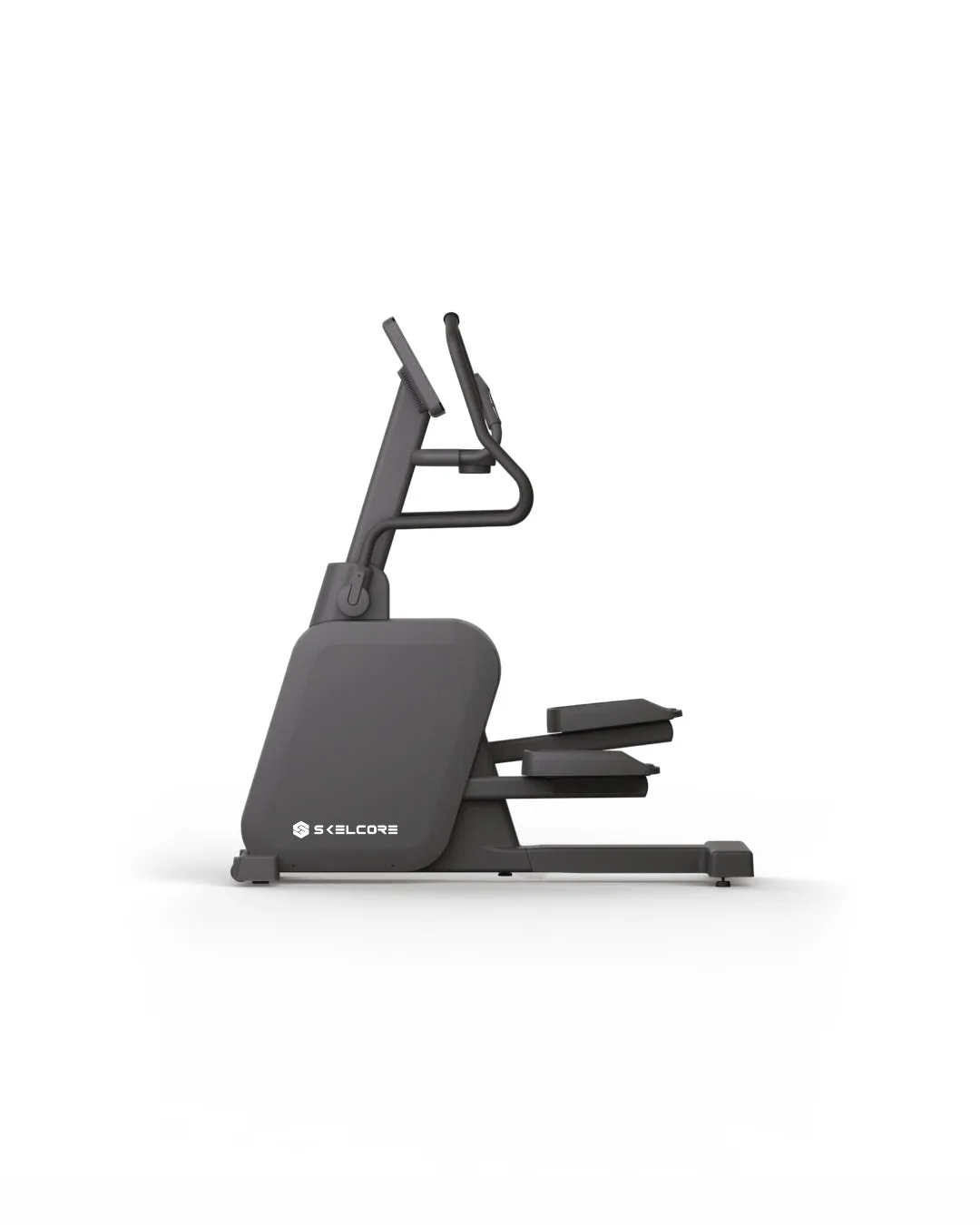
A stepper is the better choice if your members are mostly beginners or you want something that needs no power connection. The Black Series Stepper uses a 250W self-generator, so it does not need a wall socket. It has 32 electromagnetic resistance levels, a 15.6-inch LED console and takes users up to 160 kg.
It sets up at 63 x 33.46 x 68.11 inches, so it is noticeably lower than a stair mill. That makes it the one to look at for a low-ceilinged studio or a hotel room where height is the problem.
It is also part of the Black Series, so it shares a console style with the treadmills, bikes and ellipticals. Members learn one screen. Your team services one family of machines.
Incline trainer: for members who want to walk, not climb
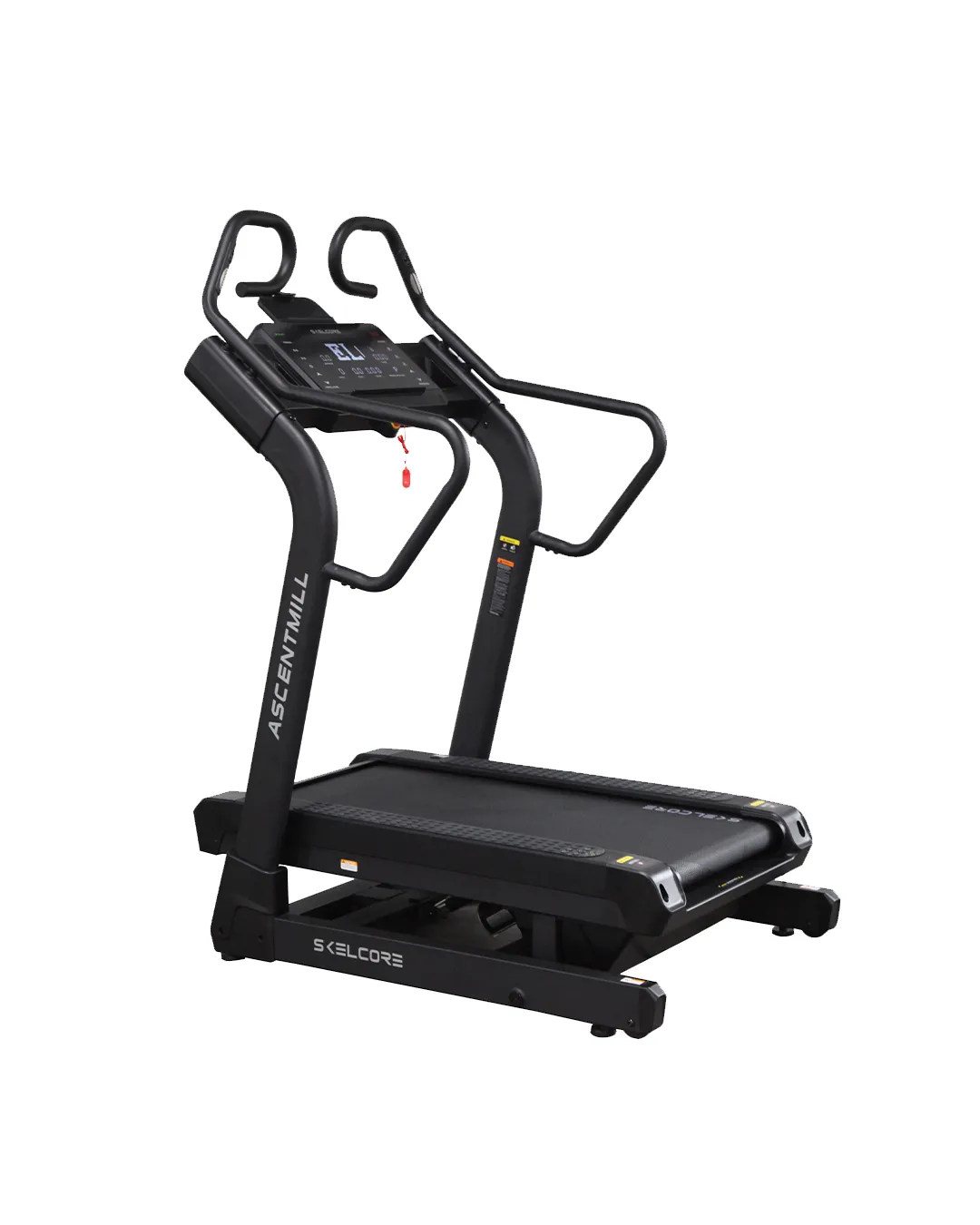
Go for an incline trainer if your members like walking and want a way to make it harder. The Mountain 50 tilts from 5% to 50% and walks at 0 to 5 mph. It takes up to 150 kg and sets up at 53 x 36 x 69 inches. For India, order the 220V version.
If you want members to run as well as climb, look at the Mountain 50 PRO, which goes up to 10 mph. It is closer to a treadmill in use, so the learning curve is almost zero. It is less of a "stair" workout, though, so be honest about what you are selling.
Stair mill, stepper or incline trainer: which one should you buy?
Here is the short version. Look at the row that matches your biggest worry.
| Machine | Best for | Size (L x W x H) | Max user | Watch out for |
|---|
| Commercial Stair Mill | Busy gym floors, real stair climbing | 1650 x 790 x 2285 mm | 160 kg | Ceiling height |
| Light Commercial Stair Mill | Studios, hotel gyms, lighter use | 1300 x 759 x 1984 mm | [TODO: confirm max user weight] | Lower top speed (140 steps/min) |
| Black Series Stepper | Beginners, low ceilings, no power point nearby | 1600 x 850 x 1730 mm | 160 kg | Feels less like real stairs |
| Mountain 50 (220V) | Walkers who want a steep uphill | 1345 x 920 x 1755 mm | 150 kg | Not a stair-climbing motion |
Our view: if you can only buy one and you have the ceiling height, buy a stair mill. It is the machine members remember. If your room is low or your members are new to training, start with a stepper.
A quick checklist before you order
- Measure the ceiling, the door and the lift or staircase the machine has to travel through.
- Decide who uses it most: beginners, glute-focused members, or HIIT groups.
- Check the power point near where you plan to put it, or choose a self-powered stepper.
- Think about the screen. If members watch videos while they train, ask about the TFT console.
- Plan where it sits. Put it where staff can see it, not in a far corner.
How long should a member use a stair climber machine?
Short sessions work best. As a rough guide, 15 to 20 minutes is a hard, honest session for most members, and beginners can start at 5 to 10 minutes. Tell your trainers to start new members at a low level, because the first few minutes feel much harder than they look.
That matters for your floor too. Short sessions mean the machine turns over quickly, so one climber serves more people than you might think. If you run HIIT blocks, a climber works well as one station in a circuit.
What does a stair climber machine cost?
Price on request. The price depends on the type of machine, the console you choose (LED or TFT), how many units you order, and what else is in your order. Delivery and installation are quoted separately. Because we deliver across India, tell us your city and we will include it in the quote. [TODO: confirm lead time for delivery, and whether installation is included]
If you are planning a whole floor, it helps to see the machine in context. Our gym setup service page covers how we plan layouts and equipment lists together. [TODO: add a real example from the team, such as a floor where a climber fixed a queue problem]
[TODO: add photo or video of a stair mill being used on a gym floor, to show real height and step size]
Ready to add a stair climber machine?
Send us your floor size, ceiling height and member mix, and we will suggest the right machine and quantity. No pressure. Just request a quote and tell us what you are planning.
Equipment in this article