Pilates Studio Setup Cost in India: What to Budget For
By Skelcore India
If you are planning a Pilates studio, the first number you want is the total cost to open the doors. The honest answer is that it depends on the city, the rent and how many reformers you start with. What we can do is show you every line of the bill, so you can fill in your own numbers.
The Pilates studio setup cost in India comes down to six buckets: space, fit-out, equipment, licences, launch costs and a cash cushion. Equipment is the one you control most, so we will spend the most time there.
The six cost buckets
Most first-time owners count the reformers and forget the rest. Use this table as a checklist and put a rupee figure against each row.
| Bucket | What it covers | How to estimate |
|---|
| Space | Deposit, first months of rent, maintenance charges | Ask 3 landlords. Deposits are often several months of rent. [TODO: add typical deposit range for target city] |
| Fit-out | Flooring, mirrors, lighting, air conditioning, reception, changing area, toilets | Get a quote from a local interior contractor on your actual drawing |
| Equipment | Reformers, spine corrector, mats, small props, storage | Price on request from us, based on model and quantity |
| Licences and insurance | Local trade licence, GST registration, liability cover | Check with your CA and the local municipal office |
| Launch | Website, signage, photos, first ads, opening offers | Set a fixed budget, do not let it grow |
| Cash cushion | Rent, salaries and bills until classes fill up | Plan for at least 3 to 6 months of running costs |
Many owners skip the last row, and it is the one that hurts. A studio rarely fills in the first month. Keep money aside for the slow start.
Space: how much room do you need?
A reformer needs the machine itself plus room to walk around it and for the instructor to stand. As a rough working rule, plan around 50 to 60 sq ft per reformer in a group class. So a room of about 600 sq ft can hold a class of eight to ten, with some room for a reception corner. Treat this as a starting point and check it against your real floor plan.
Ceiling height matters less for Pilates than for a strength gym, but air conditioning matters a lot. Clients lie down, sweat lightly and stay for 50 minutes. A stuffy room costs you renewals.
If the space has to do other jobs, such as yoga in the morning and reformers in the evening, think about folding models. We come to that below.
Equipment: where the money really goes
Reformers are the biggest line in your budget. Our Pilates reformers share the same basics. Each one uses German-made piano-wire springs and an eight-wheel carriage, and comes with a jump box, two pad attachments and double-looped straps. What changes from model to model is the frame, the number of springs and whether it folds.
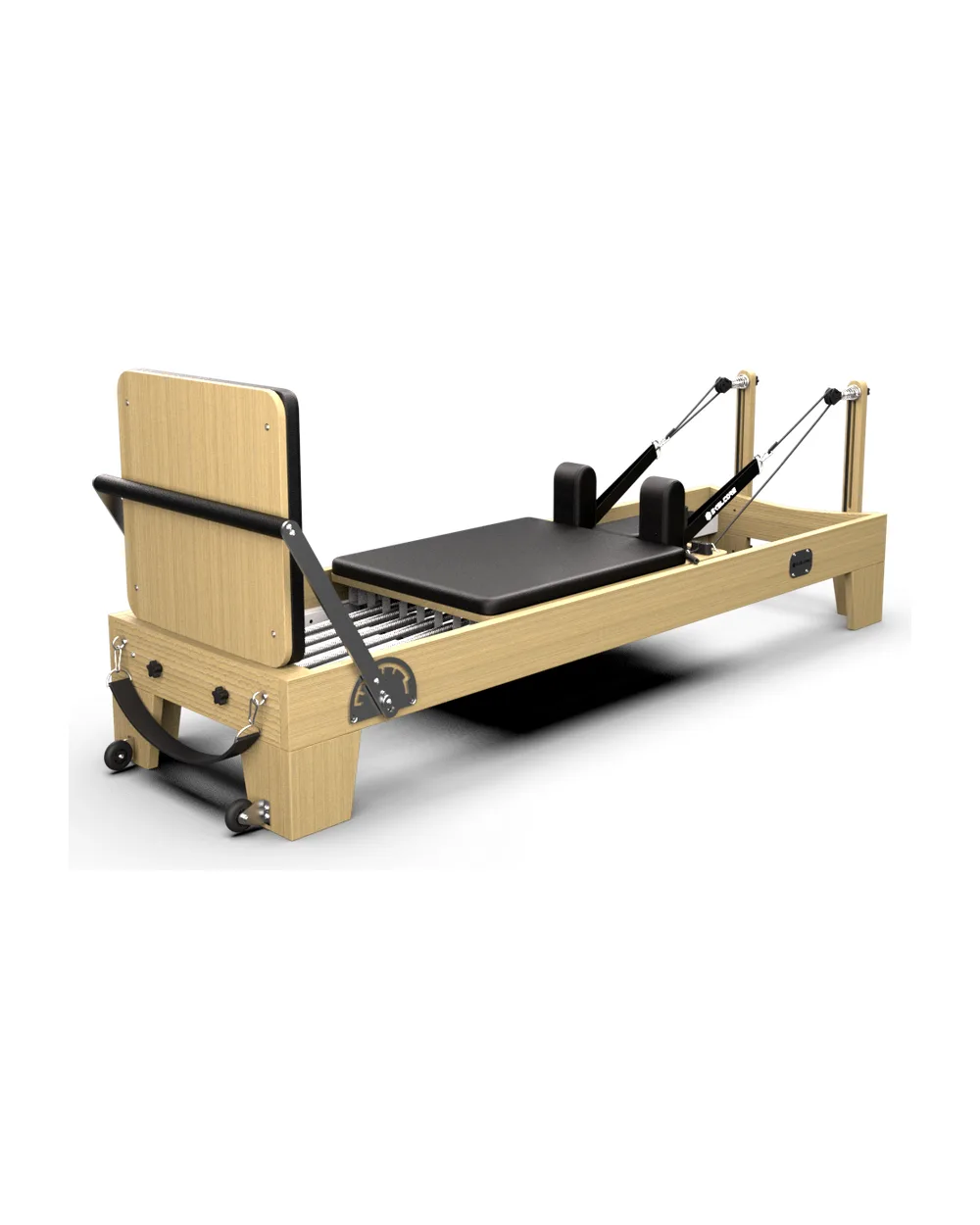
Fixed studio reformers
If the room is only for Pilates, buy fixed frames. The Classic Reformer in oak has six springs and suits back-to-back group classes. The walnut version is the same machine in a darker finish, which looks better in a darker interior.
The Aluminium Classic Reformer has a white corrosion-resistant frame. We would point you to it if your studio is in a coastal or very humid city, or if it sits inside a hotel or spa where the room is cleaned hard every day.
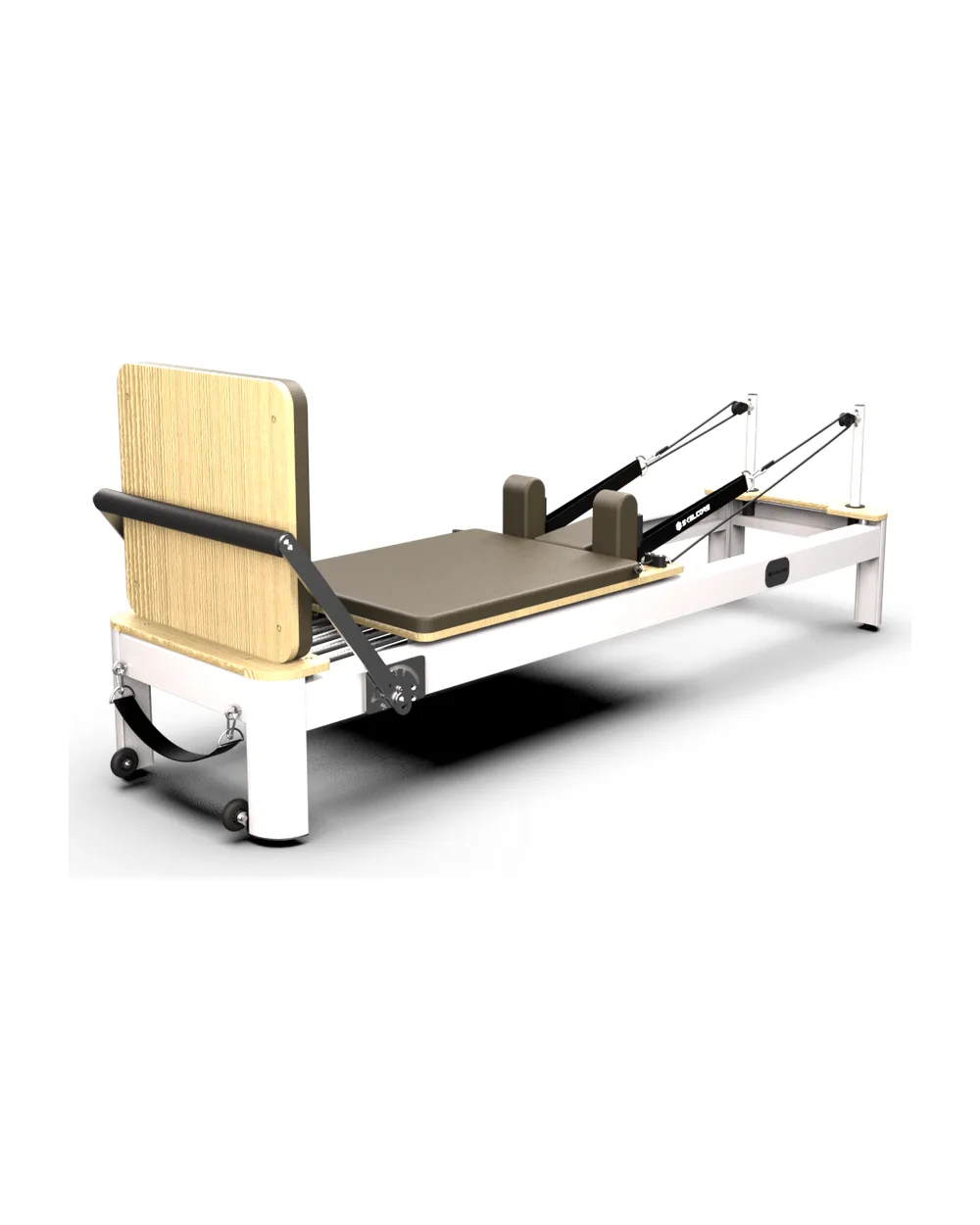
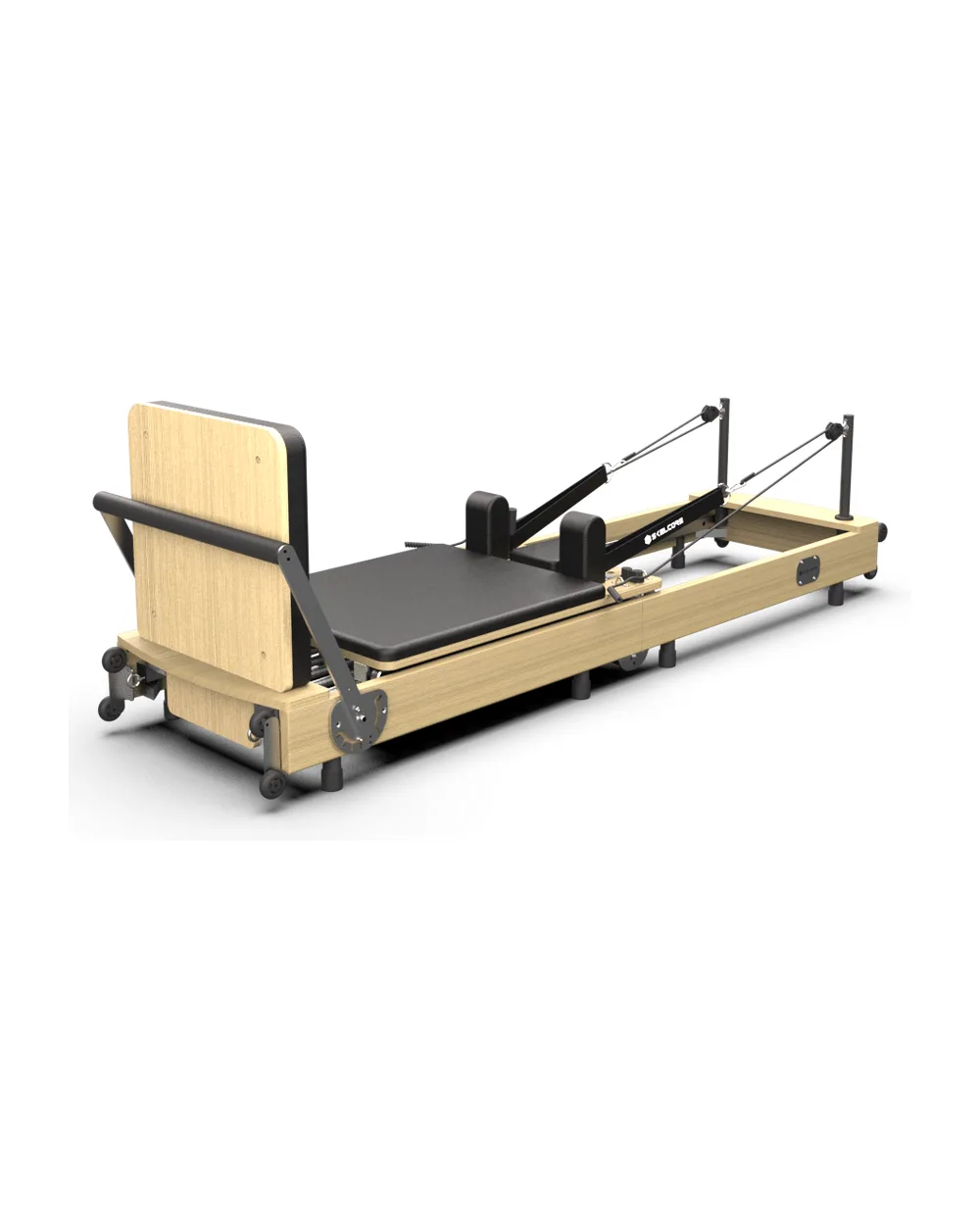
Foldable reformers
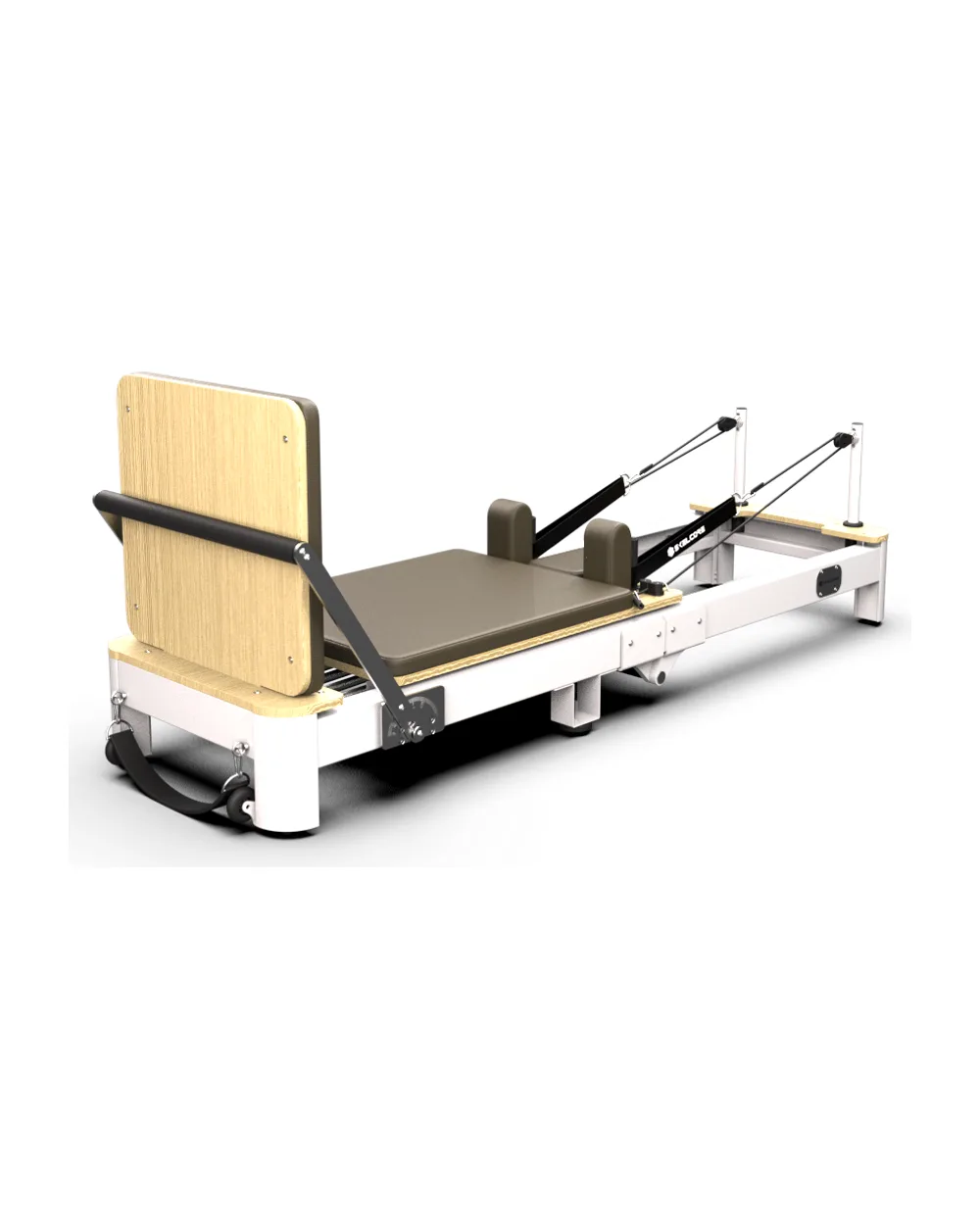
The Foldable Reformer in oak has five springs and the Foldable Aluminium Reformer has six. Both fold onto wheels, so one person can clear the room between classes. If you rent a hall by the hour, run a gym floor with a Pilates corner, or share a room with yoga, this saves you a second room.
Add a Spine Corrector if your instructors want mat and spinal work. One is usually enough to begin with.
What affects the price
We do not put prices on the website. Price is on request, and it depends on a few things:
- The model and frame (oak, walnut or aluminium).
- How many reformers you order. Bigger orders are quoted differently from a single unit.
- Whether you add a spine corrector or other pieces.
- Delivery location and installation. [TODO: confirm lead time and installation support by city]
Send us the number of reformers and your city, and we will quote against that. Do not compare our quote with a cheaper machine without checking the frame material, spring quality and what is included in the box.
How many reformers should you start with?
This is where owners either overspend or under-build. Here are three common starting points.
- Small boutique studio, 400 to 600 sq ft: 4 to 6 reformers. Run small classes and charge for the attention.
- Mid-size studio, around 1,000 sq ft: 8 to 10 reformers plus one spine corrector. This lets you run a proper timetable with full classes.
- Hotel or spa room: 1 to 3 reformers, mostly for private sessions. Aluminium frames are easier to keep clean in these rooms.
Our advice is to start slightly smaller than your plan. A full class of six feels busy and premium. A half-empty class of ten feels like a problem, and you have paid for four idle machines. You can always add reformers once your waiting list tells you to.
Running costs to plan for
Once the studio opens, the monthly bills start. List them before you sign the lease.
- Rent and maintenance charges.
- Instructor salaries or per-class pay. Good instructors are the main asset of a Pilates studio.
- Electricity and air conditioning.
- Cleaning, towels and laundry.
- Booking software and marketing.
- Servicing of the equipment. Springs, straps and ropes wear with use, so keep a small spares budget.
Then do a simple check. Take your monthly costs and divide by your average price per class. That tells you how many class places you must sell every month just to break even. If that number needs the room to be 90% full, the plan is too tight.
Where first-time owners go wrong
We see the same mistakes again and again.
First, spending the whole budget on the interiors and leaving too little for equipment. Clients judge a Pilates studio by how the machine feels under their body, not by the wall tiles.
Second, buying the cheapest reformers. A rough glide or loose springs shows up in the first week, and instructors notice it immediately. Ask for the frame, spring and wheel details in writing.
Third, forgetting that reformers must be moved and stored. If the room is shared, folding models solve the problem. If it is not, plan the layout so that each machine has clear walking space on both sides.
Fourth, no cash cushion. A studio that has to cut its prices in month two to get members never quite recovers its pricing.
A simple way to build your budget
Do this on one sheet. Write the six buckets down. Get three quotes for fit-out, one quote for equipment from us, and a rent figure from the actual property. Add 10% for surprises. Then add your cash cushion on top. The total is your real opening cost.
If you are also adding strength or cardio equipment to the same facility, our gym setup page explains how we plan the floor with you.
Talk to us before you sign the lease
Send us your floor plan, your city and how many clients you expect per class. We will suggest the model and quantity that fit, and give you a quote you can put straight into your budget. Request a quote and we will come back to you.
Equipment in this article