Multi-Station Workout Equipment: When 4 Stations Beat 4 Machines
By Skelcore India
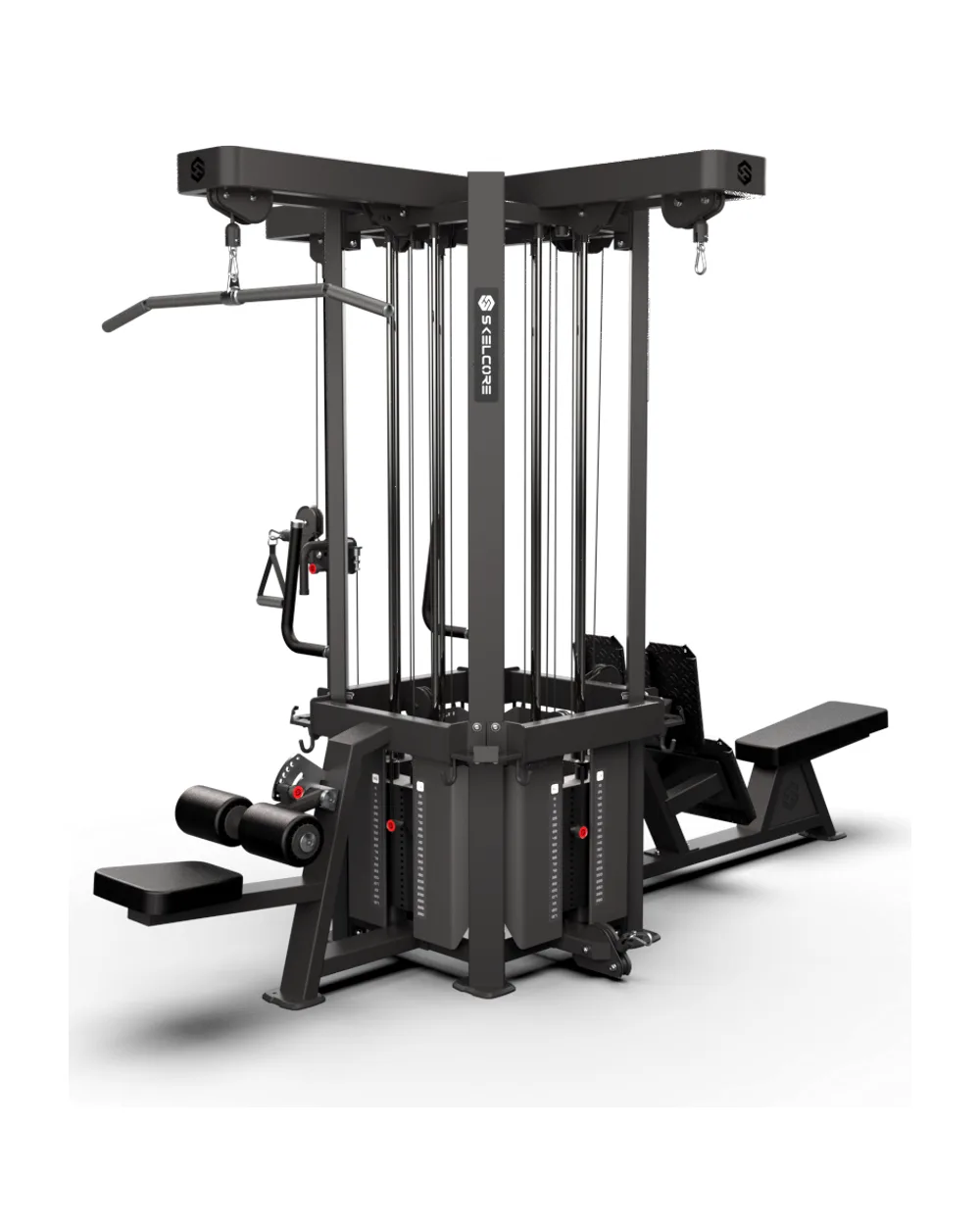
Multi-station workout equipment puts several cable stations on one frame. Our Multi Jungle 4 Station gives you a lat pulldown, a row and two hi-lo pulleys, with four separate weight stacks, in a footprint of 3456 x 2331 mm. That is roughly 8 square metres for four people training at the same time.
So is it better than buying four separate machines? Sometimes yes, sometimes no. It depends on your space, your crowd and how much you plan to grow.
What exactly do you get on a 4-station unit?
You get four stations that work independently. Two stacks are 91 kg and two are 132 kg, so the heavier stations suit pulldowns and rows, and the lighter ones suit cable work where members use less load. The main frame is 3 mm steel, the pulleys are nylon, and the unit is rated for users up to 150 kg.
The four stations are:
Lat pulldown, for back and arm pulling work
Seated row, for mid-back
Two hi-lo pulleys, for curls, triceps pushdowns, face pulls, cable raises and similar moves
Nobody has to wait for someone else to finish. One member can be on the pulldown while another uses a pulley. That is the whole point of the design.
When does a multi-station unit beat separate machines?
It wins when floor space is tight and many people train at once. Four separate pin-loaded machines need their own walking room on every side. A single multi-station frame shares that room. As a rough guide, once you add clearance, four separate machines can take well over double the floor area of one jungle. Treat that as a planning figure and measure your own room.
It also wins in places where the crowd is mixed and the equipment is mostly used for basic cable work. Think of these:
Corporate gyms. Staff come in at the same hours, usually before work, at lunch and after work. Several people want the same simple exercises together. See our corporate gym equipment page for the full picture.
Defence and institutional gyms. Batches of people train in the same slot, and the equipment needs to be plain and hard-wearing. Our defence gym equipment page covers this.
Hotel and apartment gyms. One small room, many guests at breakfast time and in the evening. One frame does more than one machine would.
[TODO: add a real example from the team of a site that chose a multi-station unit, and why]
When should you buy separate machines instead?
Buy separate machines when your members need heavy, specific loading or a lot of variety. A multi-station unit gives you cable work. It does not give you a chest press, a leg press or a shoulder press. If your members are mostly lifters who want proper machines for each muscle group, our pin-loaded machines will serve them better.
There is a second catch. If one station breaks down, the repair may affect the whole frame, depending on the fault. With four separate machines, one stopped machine leaves the other three running. [TODO: confirm with the service team how a single-station fault is handled on the Multi Jungle]
How does it compare with a functional trainer?
A functional trainer is built for variety. A multi-station unit is built for numbers. Our Functional Trainer has two adjustable cable columns with 132 kg stacks each and a footprint of 2070 x 1220 mm. One or two members can do a huge range of exercises on it, from any height. But only one or two people can use it at once.
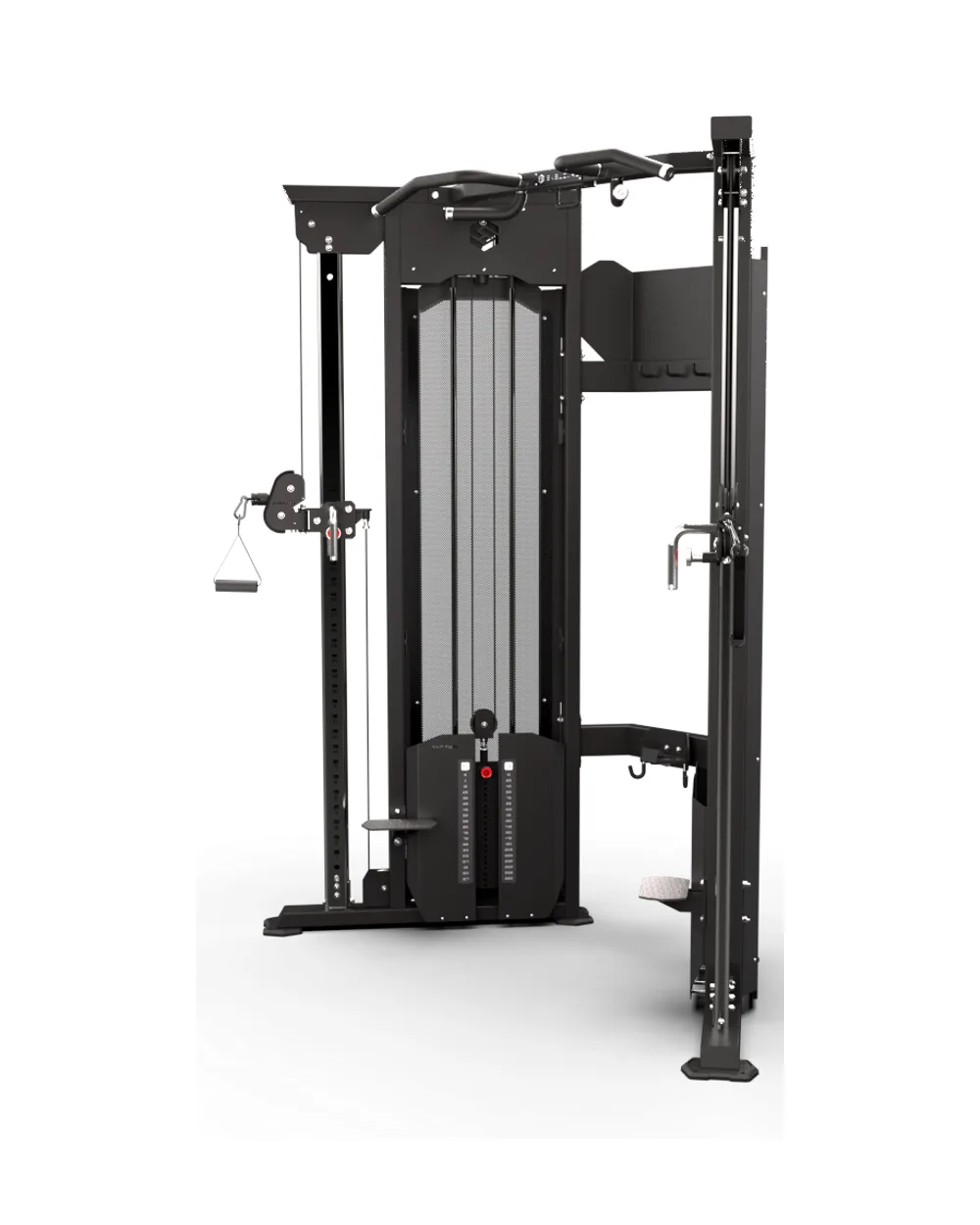
Here is a quick side-by-side, using the specs from our catalogue:
Point | Multi Jungle 4 Station | Functional Trainer |
|---|
People at once | Up to four | One or two |
Footprint | 3456 x 2331 mm | 2070 x 1220 mm |
Weight stacks | 2 x 91 kg and 2 x 132 kg | 2 x 132 kg |
Max user weight | 150 kg | 150 kg |
Best for | Busy floors, simple cable work | Personal training, varied movements |
Can it expand? | Yes, with the connector bar | No |
My advice: if you run a gym with personal trainers and small-group coaching, buy the functional trainer first. If you run a corporate or institutional gym with lots of simple, parallel use, the jungle makes more sense. Our gym setup team can help you decide for your room.
Can you start small and add stations later?
Yes, and this is the strongest reason to look at multi-station equipment. The Multi-gym Connector Bar joins two or more units into one continuous frame. It supports 8, 12, 16 and 24-station layouts, and it is made from 3 mm steel tubing. (The product name is spelt "Mutli" in our catalogue, and that spelling matches the page address.)
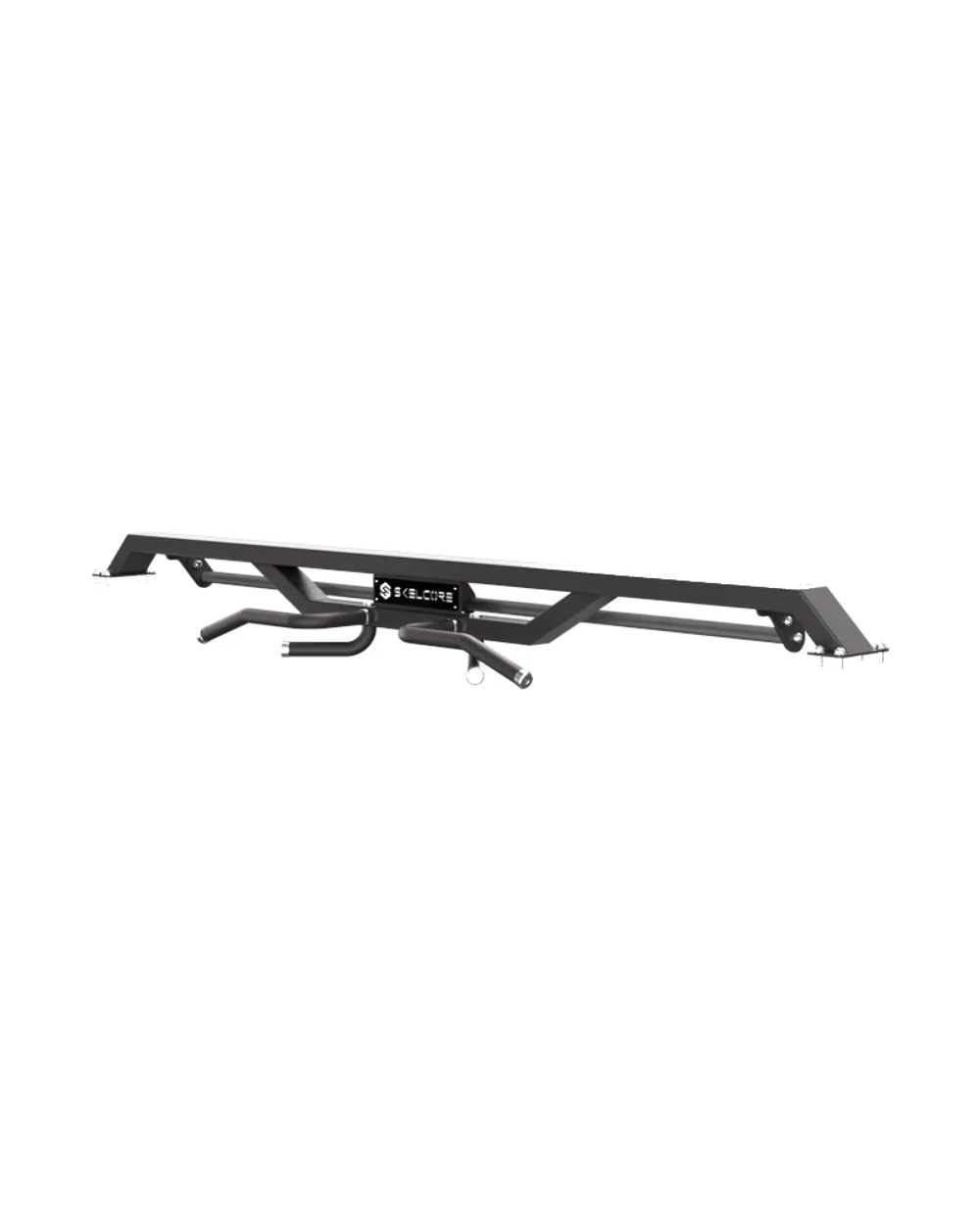
So you could open with one 4-station unit, watch how busy it gets, and add another later. Say you are fitting out a corporate gym for a company that expects headcount to grow. You can plan the room around a future 8-station line instead of buying a different kind of machine each year.
One practical point. If you plan to expand, tell us at the start. The wall space and the line the units will run along need to be decided before the first unit goes in. [TODO: confirm whether units bought at different times can be joined, and any lead time for extra units]
What should you check before you order?
Run through this list before you finalise the plan:
Measure the room, not just the footprint. 3456 x 2331 mm is the machine itself. Members need space to stand, pull and walk around it. A rough guide is about a metre of clear space on the sides members use.
Check the ceiling. The unit is 2274 mm tall. Add room for the lat pulldown bar and a person standing under it.
Think about peak hours. Count how many people really arrive together. If it is rarely more than two or three, a jungle may be more than you need.
Look at your members' weights. The unit is rated to 150 kg for users, and the stacks go up to 132 kg. Make sure that suits your members.
Decide about growth. Will you want 8 or 12 stations in a year or two? Plan the connector bar line now.
Keep other cardio and strength zones in mind. A multi-station block should sit near free-weight space, not in the middle of the walkway.
Pricing is by quotation, and the final figure depends on the number of stations, whether you need the connector bar, and delivery and installation to your site. Price on request.
Our view: is it worth it?
For corporate, hotel, defence and institutional gyms, usually yes. You save floor area, you serve more people, and you can grow in steps. For a boutique or lifter-focused gym, usually no. Those members want a wider choice of machines, and one frame cannot give that.
Most gyms that are not sure end up with a mix: one multi-station unit for general cable work, plus a functional trainer or plate-loaded machines for the serious lifters.
Tell us your room size, how many members you expect and how they train. We will suggest a layout that fits, with a quote for it. Request a quote and we will take it from there.
Equipment in this article