Gym Equipment Names with Photos: A Buyer's Guide
By Harikrishna
If you are fitting out a commercial gym, knowing the right gym equipment names saves you time with suppliers, trainers and installers. A "chest press" from one brand is a "seated press" from another, and a quote that lists machines by vague names invites mistakes. This guide gives you the common machine names, what each trains, and photos of Skelcore models so you can match the name to the machine on your floor.
Why gym equipment names matter when you buy
Most buyers meet equipment names in three places: a floor plan, a quotation and a trainer's programme. When all three use the same words, you avoid ordering a leg curl when you wanted a leg extension. It also helps to know the two loading types, because the name often hides it. In Skelcore's range, strength machines are either plate-loaded (you add weight plates) or pin-loaded (you move a pin in a weight stack).
Chest machines
Chest press is the most recognised machine name in any gym. You push handles forward from a seated position, which trains the chest, front shoulders and triceps. Variants carry a descriptor: incline chest press shifts work to the upper chest, decline to the lower chest, and wide uses a broader grip path.
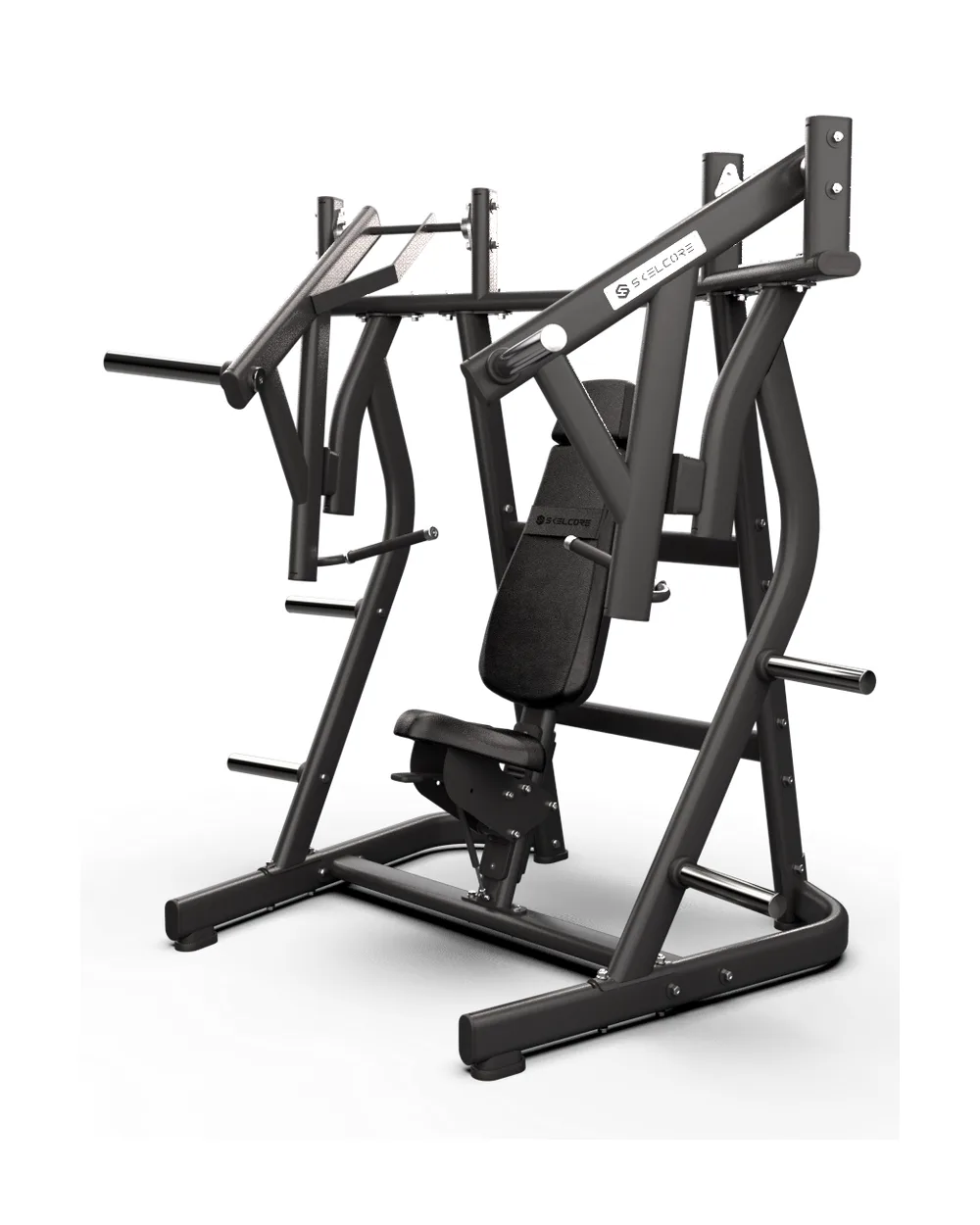
The photo shows the Pro Seated Chest Press (SK-PROPLA-060). Pec fly (also called pec deck) is the other core chest machine: arms sweep inwards in an arc, isolating the chest. Many pec flys double as a rear delt machine when you face the pad, as with the Apex Pin Loaded Pec Fly / Rear Delt (SK-APEX-07).
Back machines
The lat pulldown pulls a bar or handles down towards your chest, training the lats. It is usually the most used back machine, so many gyms place more than one. The seated row pulls handles towards the torso horizontally, working the mid-back. Names such as iso-lateral mean each arm moves independently, which helps balance left and right sides.
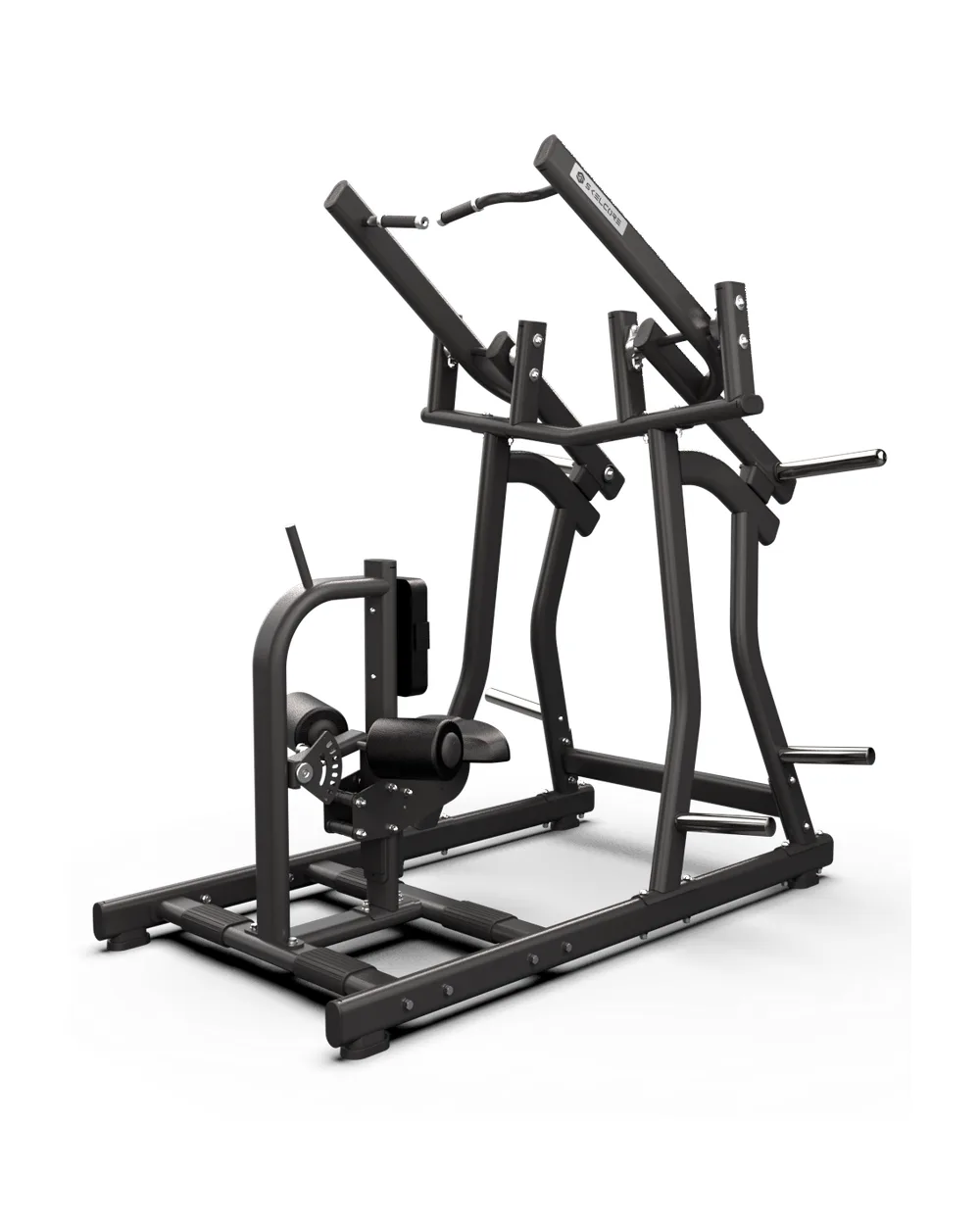
Above is the Pro Front Facing Lat Pull Down (SK-PROPLA-069). Other back machines include the low row, high row and pull-over. A back extension (hyperextension) trains the lower back and glutes.
Shoulder and arm machines
- Shoulder press: overhead press for the deltoids and triceps.
- Lateral raise: raises the arms out to the side to isolate the side delts.
- Bicep curl and preacher curl: isolate the biceps; the preacher version supports the upper arm on an angled pad.
- Tricep extension and seated dip: target the triceps.
- Assisted chin-up / dip: a counterweight helps beginners perform bodyweight pulls and dips.
Leg and glute machines
Leg machines are the names newcomers confuse most. The leg extension straightens the knee and trains the quadriceps. The leg curl bends the knee and trains the hamstrings; it comes in seated, prone (lying) and kneeling versions. The leg press pushes a platform away with your feet, working quads, glutes and hamstrings together.
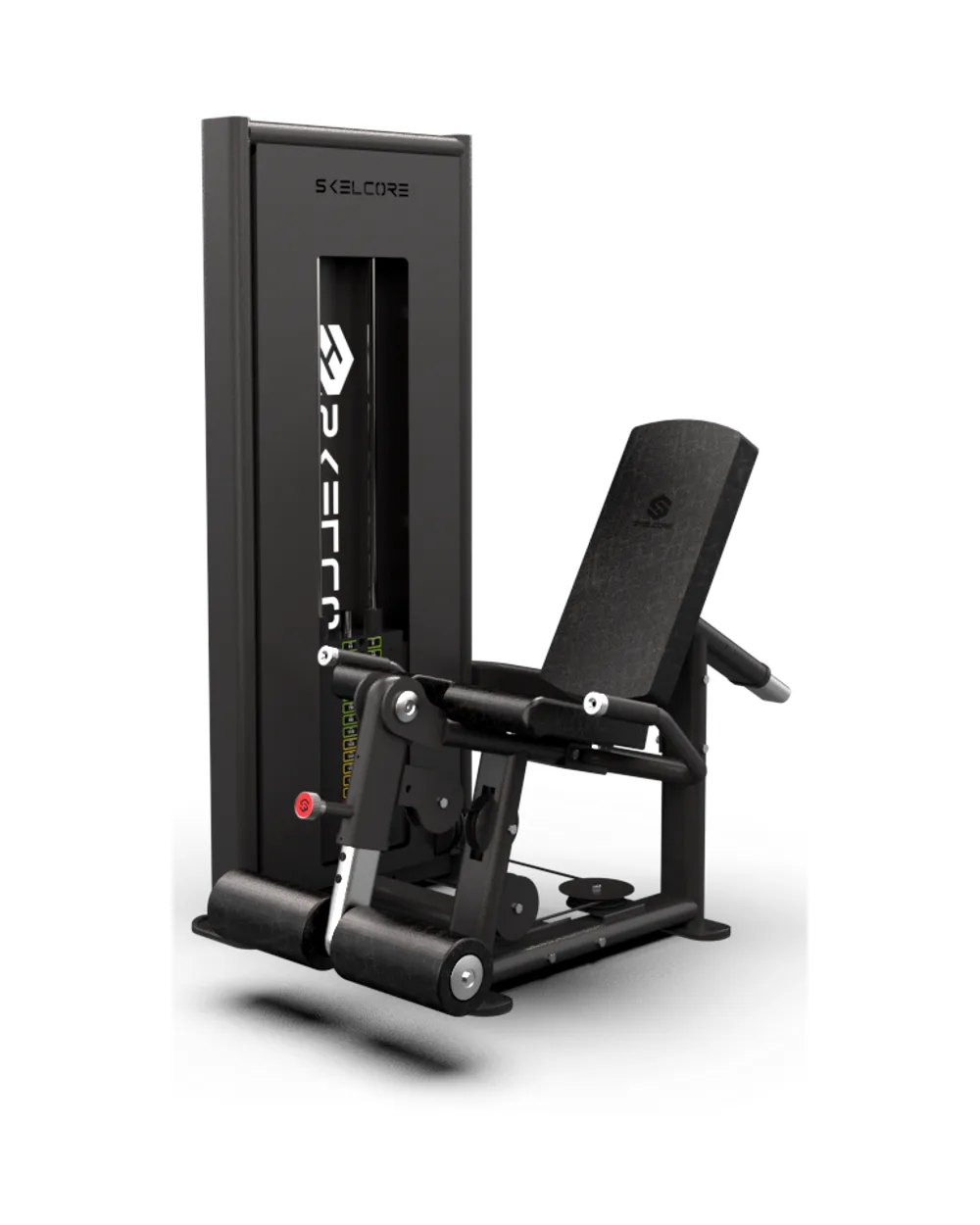
The Apex Pin Loaded Leg Extension (SK-APEX-16) is shown above. For heavier work, the Pro Plus series adds the hack slide, pendulum squat, belt squat and the Pro Series 45 Degree Leg Press V2 (SK-PROPLA-026). For glute training you will meet hip thrust, glute kick-back, and abductor / adductor machines, which work the outer and inner thigh. The abductor / adductor is often a combined machine to save floor space.
Core machines
The abdominal crunch machine lets you load a crunch movement, and the torso rotation machine trains the obliques. Multi ab benches and back extensions are the usual bench-based alternatives.
Racks, benches and functional equipment
Not every name is a machine. These appear in almost every commercial gym:
- Squat rack / half rack: a steel frame with safety catches for squats and presses. See the racks and functional range.
- Smith machine: a barbell on fixed guide rails.
- Functional trainer / cable crossover: two adjustable pulleys for hundreds of cable exercises.
- Flat, incline and adjustable benches: the base for dumbbell and barbell work, available in the benches range.
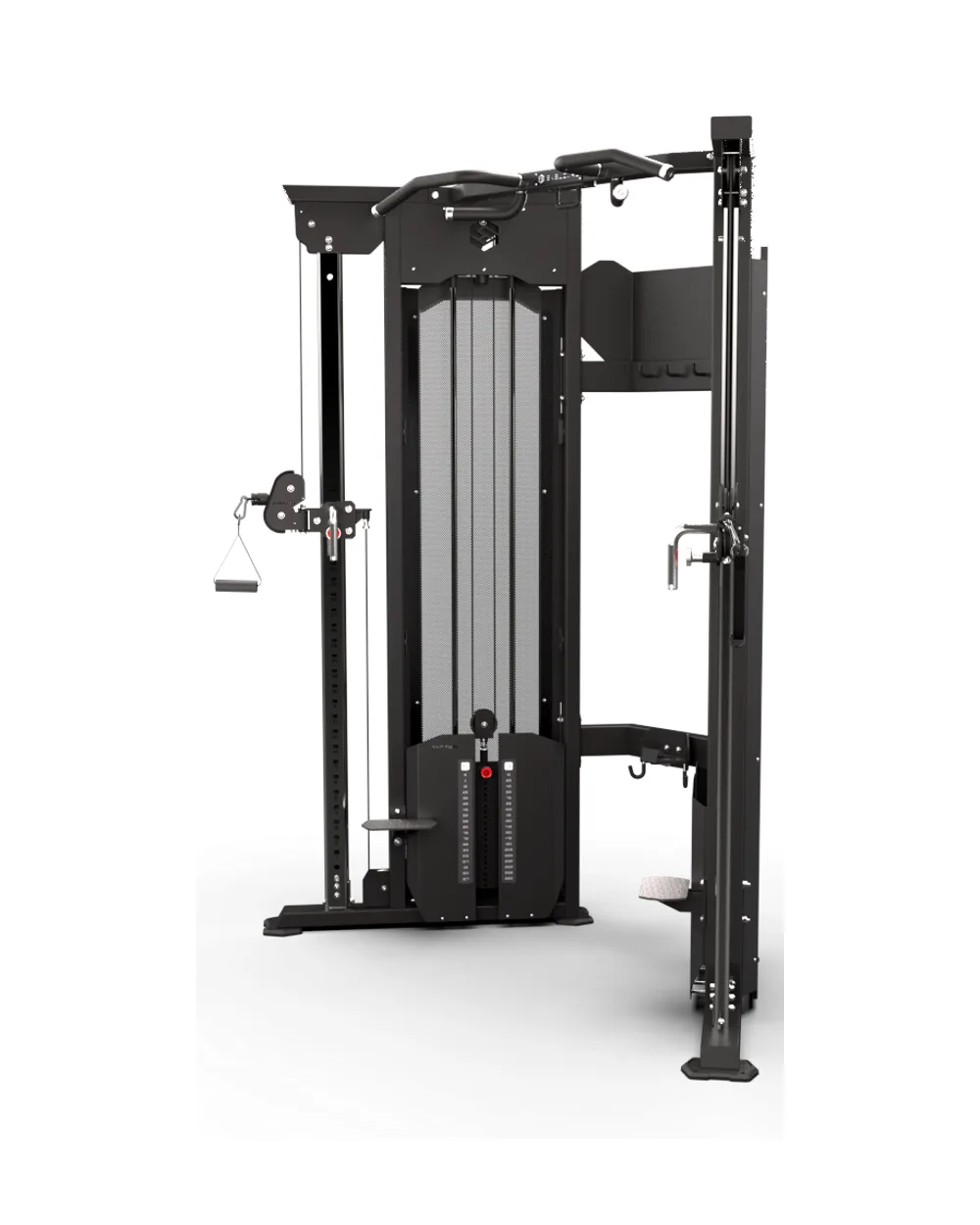
The Functional Trainer (SK-FT-01) above is a good example of one machine replacing several single-purpose stations.
Cardio equipment names
Cardio names are more familiar, but the variants matter. A treadmill may be motorised or a curved, self-powered "free running" type. An upright bike has a seat above the pedals; a recumbent bike has a backrest and a lower, reclined position, so members with joint or back concerns prefer it. An elliptical (cross trainer) is low impact. A stepper or stair mill simulates climbing, and an air bike or rower adds resistance from a fan. Browse the cardio range for each type.
Free weights and accessories
Free weights include dumbbells (hex, round, urethane or chrome), barbells, EZ curl bars, weight plates and kettlebells. Storage names include dumbbell rack and plate tree. Cable accessories such as the tricep rope and D-ring handles attach to pulleys. See the full accessories range.
Names that cause confusion
Suppliers and trainers often use different words for the same machine. Keep these pairs in mind when you compare quotations:
- Pec deck = pec fly = butterfly. All describe the same arc-shaped chest isolation movement.
- Hip thrust, glute drive and glute bridge machines are close relatives; check the photo and the SKU rather than relying on the name.
- Hack slide, hack squat and pendulum squat are different leg machines with different movement paths, so do not treat them as substitutes.
- Multi gym, multi station and jungle usually mean several stations in one frame, such as the Multi Jungle - 4 Station (SK-MLT-04).
- Cross trainer = elliptical, and stair mill = stepper in many price lists.
Plate-loaded and pin-loaded: what the series names tell you
Skelcore groups strength machines into named series, which is a helpful shortcut. The Pro Plus, Pro and Power Plate series are plate-loaded, while Apex, Power Pin and Trinity are pin-loaded. If you want a deeper comparison, read our guide on plate-loaded vs selectorized machines. Within a series the machines share a design language, so a full row looks consistent and uses compatible spare parts.
Quick reference table
| Equipment name | Main muscles trained | Type |
|---|
| Chest press | Chest, shoulders, triceps | Plate or pin-loaded |
| Lat pulldown | Lats, biceps | Plate or pin-loaded |
| Seated row | Mid-back | Plate or pin-loaded |
| Shoulder press | Deltoids, triceps | Plate or pin-loaded |
| Leg extension | Quadriceps | Plate or pin-loaded |
| Leg curl | Hamstrings | Plate or pin-loaded |
| Leg press | Quads, glutes, hamstrings | Plate or pin-loaded |
| Abductor / adductor | Outer and inner thigh | Plate or pin-loaded |
| Functional trainer | Full body | Cable |
| Half rack | Full body | Free weight |
| Treadmill | Cardiovascular | Cardio |
How to use these names when planning your gym
- Write a list by zone: chest, back, legs, shoulders and arms, free weights, cardio.
- Decide loading type: plate-loaded gives heavy, scalable loading; pin-loaded is quick to adjust and suits mixed-ability members.
- Match quantity to members: high-traffic machines like lat pulldown and leg press need duplicates.
- Quote by SKU: ask suppliers to list the model name and SKU for every item so there is no ambiguity.
- Check space and power: measure floor area, ceiling height and, for cardio, power points.
Prices depend on the series, loading type, upholstery and finish, quantity and delivery location, so we quote on request. [TODO: confirm lead time and installation scope for the buyer's city]
Get a quote for your gym
Once you know the names, the next step is a specification. Send us your floor area and member profile and our team will suggest a machine list and quote with SKUs. Request a quote to get started.
Equipment in this article