Gym Equipment Checklist for a New Gym: What to Buy First
By Skelcore India
Most new gym owners buy in the wrong order. They fall for a shiny machine, then run out of money for flooring, benches and plates. This checklist fixes that. It is the list we use when someone calls us and says, "I am opening a gym, what should I buy first?" If you want the wider planning view, our gym setup service page covers layout and turnkey projects.
The right gym equipment for a new gym depends on your size and your members. But the order of buying is almost always the same. Floor first, then the big movers, then the small things that make people stay.
Start with the floor and the space, not the machines
Before you order anything, measure the room and the ceiling. Write down the clear height, the door width and where the lift or stairs are. Machines are heavy and long, and we have seen a perfectly good rack stuck at a staircase.
Ceiling height matters more than people think. Our Half Rack stands about 2.35 m tall. If your false ceiling comes down to 2.4 m, it will fit, but it will feel tight and you cannot hang anything above it.
Next, think about flooring. Rubber flooring under free weights and racks protects your slab and keeps the noise down. Do it before the equipment arrives, not after.
A simple way to split your budget
There is no fixed rule, but a common split for a general-purpose gym looks like this. Treat it as a starting point and change it for your members.
Zone | Share of floor and budget | What goes in it |
|---|
Cardio | About a quarter | Treadmills, bikes, cross trainers, one stepper or stair mill |
Machines | About a third | Pin-loaded stations, a few plate-loaded machines |
Free weights | About a quarter | Dumbbells, benches, racks, barbells, plates |
Open area and storage | The rest | Stretching space, functional kit, racks for tidy storage |
A members-only ladies' gym will push the machine share up. A strength-focused gym for serious lifters will push the free weights share up. Decide who your main member is before you pick numbers.
Cardio: buy fewer, buy better
Cardio gets used the most, so it breaks the most. Do not fill the room with cheap units. Four solid treadmills beat eight weak ones.
For a 2,000 sq ft gym, a sensible start is 3 or 4 treadmills, 2 upright bikes, 1 recumbent bike and 2 cross trainers. Add a stepper later if members ask.
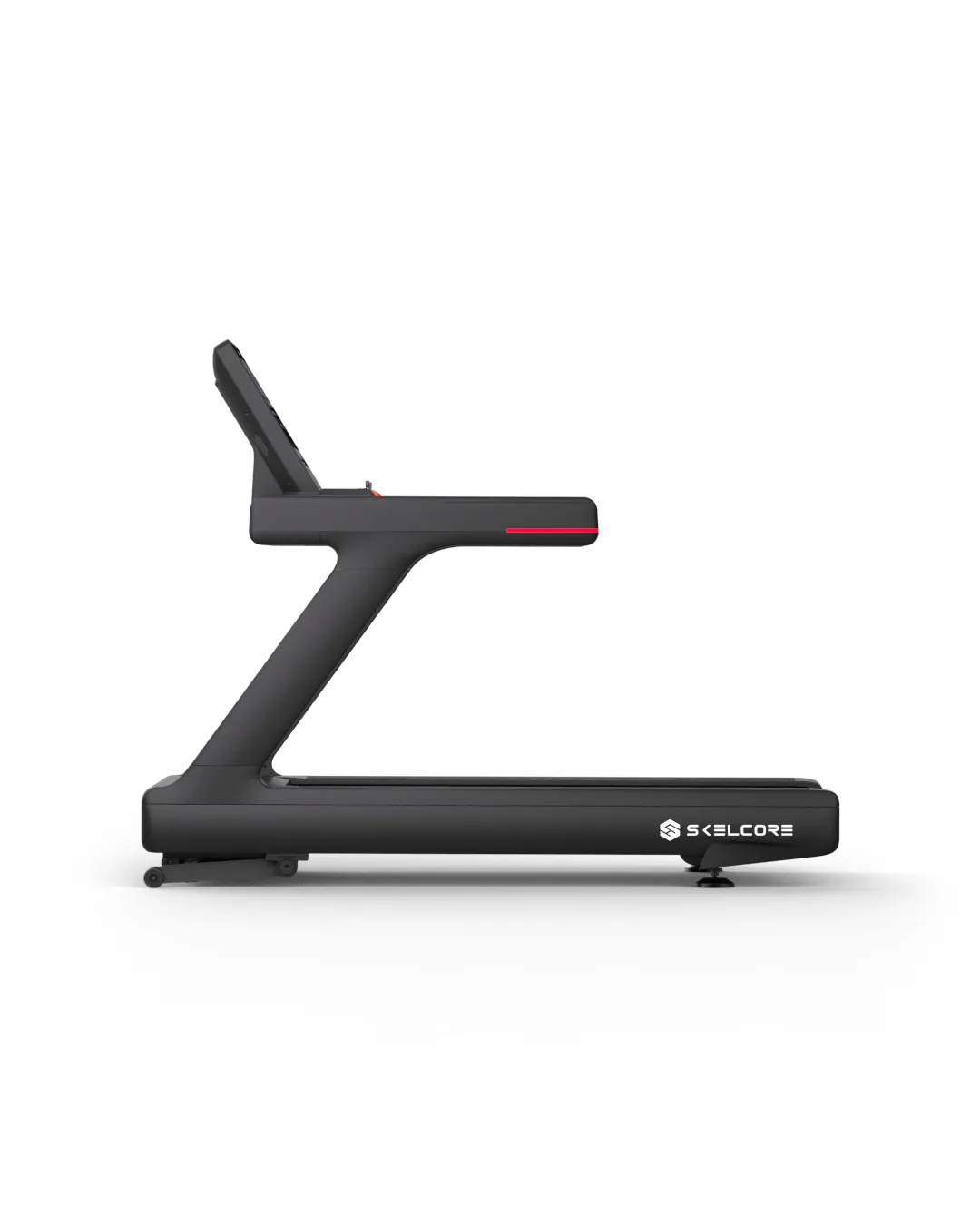
Check the footprint before you place a treadmill. Our Black Series Treadmill 6.0 LED (220V) needs roughly 2.1 m by 1.0 m of floor, takes users up to 180 kg and has a 6 HP AC motor. Leave extra room behind it for safety. You can see the rest of the range on our Black Series page.
One more thing. Choose 220V units for India unless you have a reason not to. Some of our models come in 110V as well, and those are not what most Indian buildings need.
Strength machines: start with pin-loaded
If your members are mostly beginners or people over 30, start with pin-loaded machines. You move a pin to change weight, there are no plates to load, and nobody needs a trainer standing next to them. That means less injury risk and fewer complaints.
A basic machine set covers chest press, shoulder press, lat pulldown, seated row, leg press, leg extension, leg curl and an abdominal machine. Many owners also add a pec fly or rear delt machine and an adductor/abductor. Look at the pin-loaded range to see what is available.
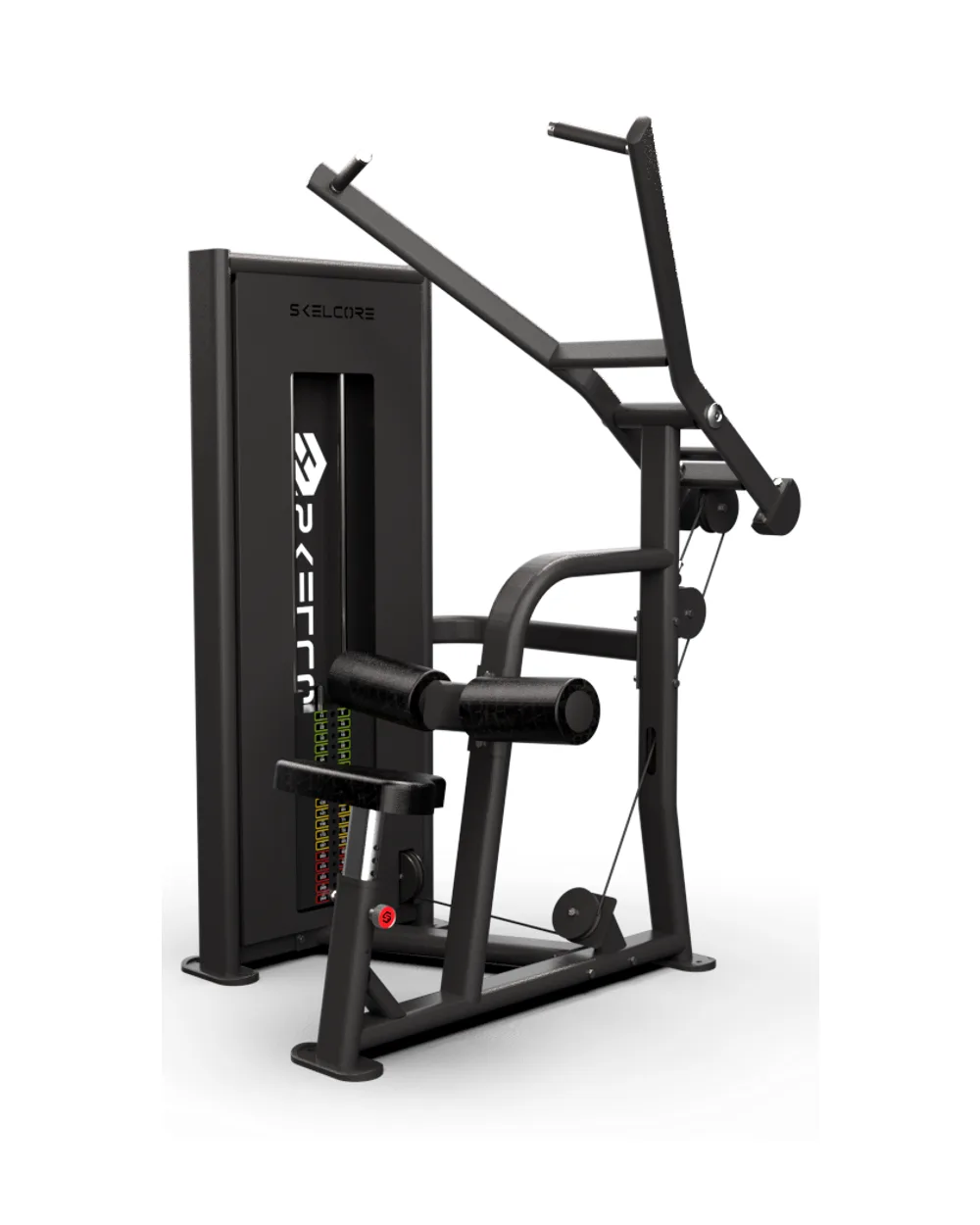
The Apex Pin Loaded Lat Pulldown is a good example of the footprint to plan for. It sets up in about 1.1 m by 1.35 m and carries a 120 kg weight stack. Most machines need a clear walking space of around a metre on the sides, so do not pack them wall to wall.
Add plate-loaded machines only when you have a regular crowd of stronger lifters. They need plates, they need more space and members must load them correctly. You can browse them on our plate-loaded page. For a first gym, two or three are plenty: a leg press or squat machine, a hip thrust and maybe a row.
Free weights: the part everyone underestimates
Free weights take less money than machines but more thought. You need a full set of dumbbells, a few barbells, plates, benches and somewhere to put it all.
Dumbbells: a pair of each weight in a useful range. For a general gym, many owners go from light pairs for warm-ups up to heavy pairs for strong members. Rubber hex dumbbells are the usual choice because they do not roll and they protect the floor. See our dumbbells.
Benches: at least two adjustable benches and one flat bench. Our Adjustable Bench is rated to 200 kg user weight.
Barbells and plates: start with a few straight bars and one EZ curl bar. Buy weight plates in the small sizes first, because members use the small ones the most.
Rack: one half rack or squat rack is enough for a first gym.
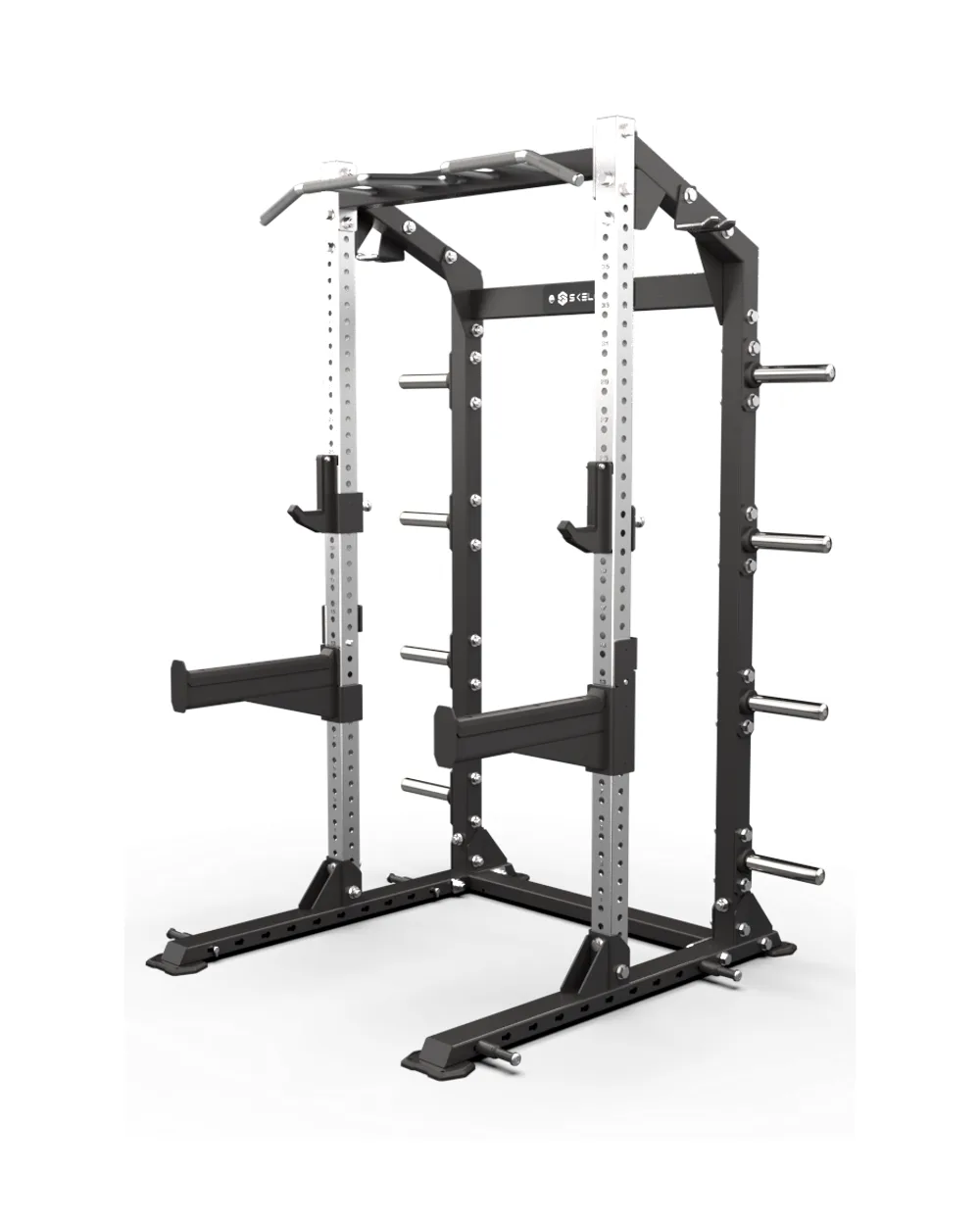
The half rack gives you squats, bench pressing and pull-ups in one footprint of about 1.5 m by 1.5 m. That is a good deal in a small room. If you have the space and budget for a second rack, buy it only after you see how busy the first one gets.
Storage is not optional
A gym with dumbbells on the floor looks messy and is unsafe. Budget for storage on day one. A Dumbbell Rack 2-10 is about 2.5 m long and is rated to hold 600 kg. Check the rack length before you decide which wall it lives on.
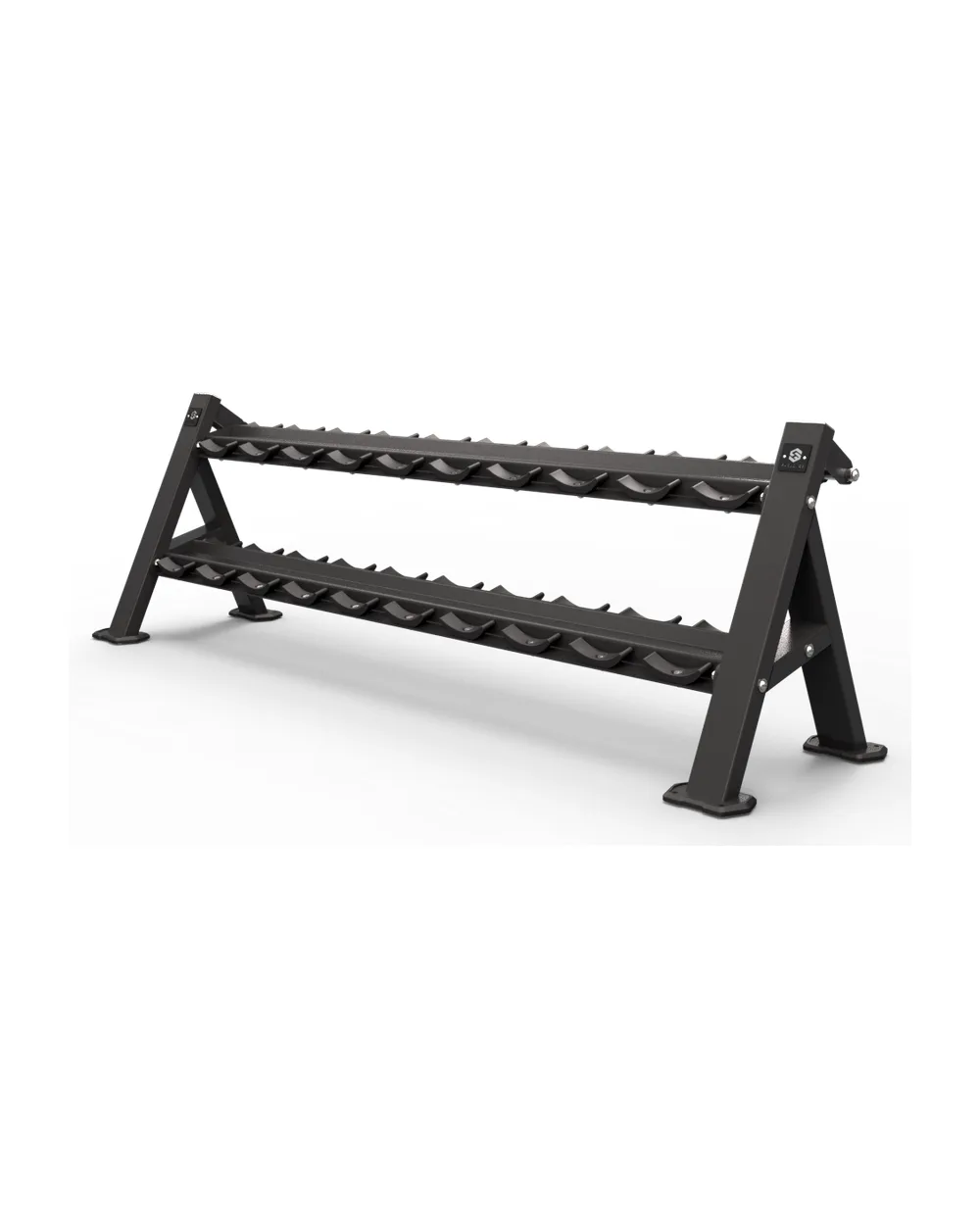
You will also want a plate tree, a place for bars and a small stand for cable attachments. All of these sit on our storage page.
Functional space and the small things
Keep a clear open area, even if it is only 100 to 150 sq ft. Members use it to stretch, do mobility work and train with kettlebells or a sled. Without it, they stretch in the machine aisles.
A functional trainer is a smart one-piece buy if you are short on space. The Functional Trainer has two 132 kg weight stacks and covers a lot of exercises from a single spot. It does need about 2.07 m by 1.22 m and 2.3 m of height.
Then add the small things: mats, a few kettlebells, a foam roller, mirrors, wall clocks, a water point, towels and a first-aid kit. They cost little. Members notice if they are missing.
A buying checklist you can print
Buy first | Buy next | Buy later |
|---|
Flooring and mirrors | Dumbbell set and storage | Second rack |
3 to 4 treadmills, bikes | Barbells, plates, plate tree | Plate-loaded machines |
Core pin-loaded machines | Functional trainer or cable station | Stair mill, air bike, sled |
Half rack, benches | Mats, kettlebells, small kit | Premium finishes and branding |
What affects the price
Prices are on request, because they depend on what you pick. The main things are the number of machines, the series, finishes and upholstery colour, and whether you want custom branding. Freight and installation to your city also change the final figure. Tell us your room size and budget and we will work backwards from there.
[TODO: confirm lead time and installation support for Bangalore and other cities]
Mistakes we see again and again
Buying too many machines and no storage.
Putting cardio in a dark corner, so nobody uses it.
Ordering before measuring doors and lifts.
Skipping flooring to save money, then paying for slab repairs.
Copying another gym's list without checking who your members are.
Ready to plan yours?
Send us your floor plan and a rough budget, and we will help you turn this checklist into a real list. Request a quote and our team will get back to you.
Equipment in this article